From Summer Momentum to Fall Advocacy: How Kentucky Communities Can Prepare for Safer Streets
From Summer Momentum to Fall Advocacy: How Kentucky Communities Can Prepare for Safer Streets
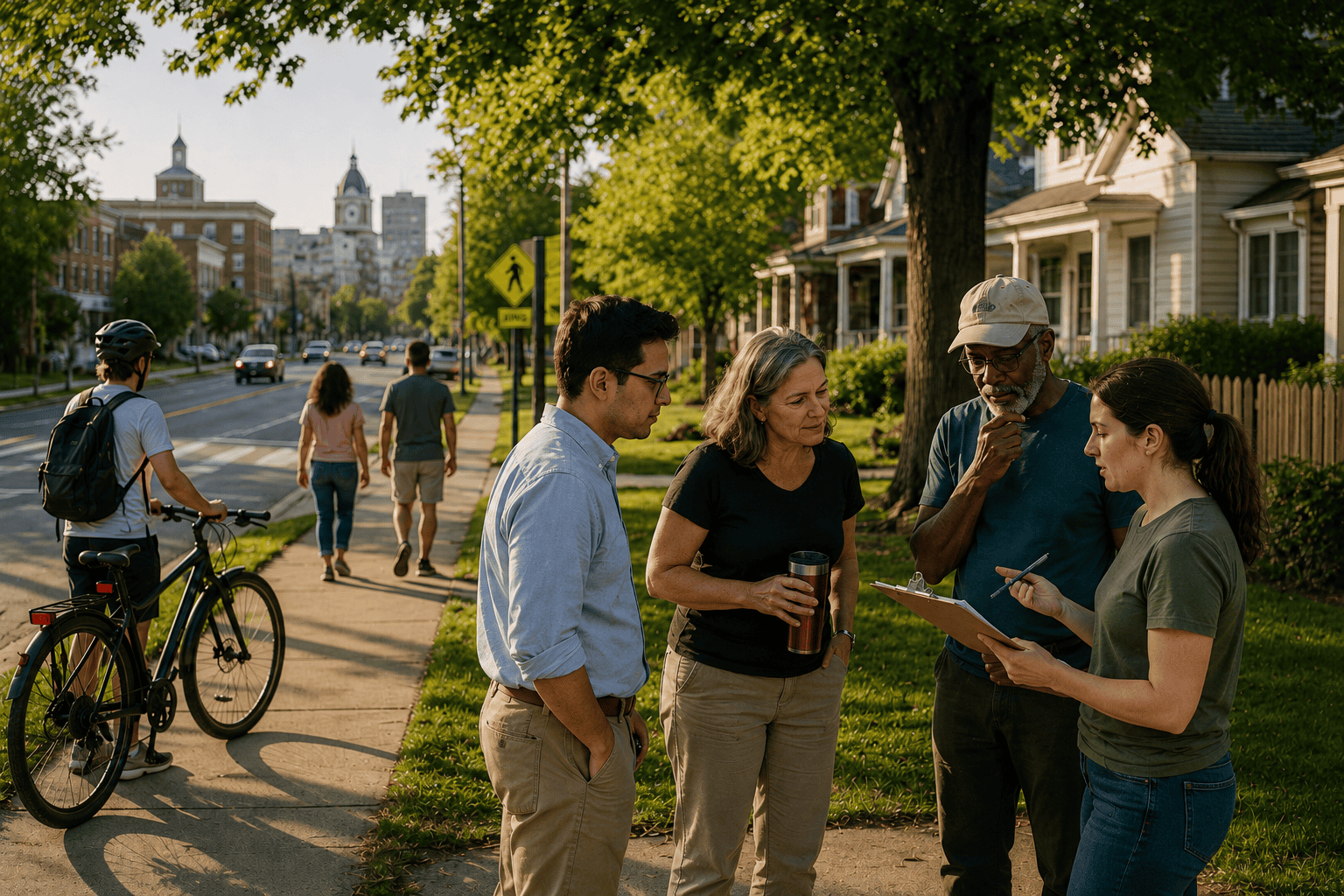
Summer often makes walking and biking more visible in Kentucky communities. People are out on trails, sidewalks, neighborhood streets, downtown corridors, park paths, and rural roads. Families walk after dinner. Cyclists take advantage of longer days. Visitors explore local routes. Residents notice where connections feel easy and where the built environment makes movement harder than it should be. As summer winds down, communities have an opportunity to turn those observations into action.
Fall is a natural time to organize what people noticed, identify priorities, and prepare for local conversations about safer, more accessible streets. Those conversations may happen in city halls, fiscal court meetings, planning commissions, neighborhood groups, public health coalitions, tourism meetings, or informal conversations between residents and local leaders.
Advocacy does not have to begin with a formal campaign. Often, it begins when people pay attention to everyday conditions and ask what would make their community safer, healthier, and easier to move through.
Start With What People Are Already Doing
Every community has places where people are already walking and biking. Some may be obvious: a popular trail, a downtown sidewalk, a park loop, a neighborhood route, or a road frequently used by cyclists. Others may be less formal: a worn path through grass, a shoulder people use because there is no sidewalk, or a shortcut that shows where people want to go.
These patterns matter. They show where demand already exists. They also show where people may be walking or biking despite conditions that are uncomfortable, disconnected, or unsafe.
As summer activity slows and fall routines begin, communities can ask:
- Where did people walk or bike this summer?
- Which streets, trails, sidewalks, or crossings felt comfortable?
- Where did people avoid walking or biking because the route felt unsafe?
- Which destinations were difficult to reach without a car?
- Where are there missing links between neighborhoods, parks, downtowns, trails, libraries, shops, or community centers?
- What barriers became more noticeable during summer activity?
These questions help communities move from general concern to specific opportunities.
Look for Gaps in the Network
A walking or biking network is only as useful as its connections. A sidewalk that ends before reaching a destination creates a barrier. A trail that stops short of downtown limits its usefulness. A crossing that feels unsafe can divide a neighborhood. A road with no shoulder may discourage people from biking even when the destination is nearby.
Gaps do not always look dramatic, but they can shape daily choices. A missing curb ramp may affect someone using a wheelchair, walker, stroller, or mobility aid. Poor lighting may make an otherwise useful route feel uncomfortable in the evening. Overgrown vegetation may block visibility. Faded markings may make a crossing harder for drivers to notice. A short missing sidewalk segment may prevent a family from walking to a park.
Communities preparing for fall advocacy conversations can begin by identifying these gaps clearly. That does not mean every issue can be fixed immediately. It means the community has a clearer understanding of where the system is working, where it is not, and where improvement could make a meaningful difference.
Document What You See
Documentation helps turn local experience into useful information. A concern that feels obvious to residents may not be visible to decision-makers unless it is clearly described. Photos, short videos, maps, written notes, and community feedback can help show what is happening on the ground.
Useful documentation might include:
- Photos of missing or damaged sidewalks
- Notes about difficult crossings or high-speed areas
- Examples of worn paths where people are already walking
- Locations where trail, sidewalk, or shoulder connections stop suddenly
- Places where lighting, visibility, drainage, or maintenance affects safety
- Feedback from residents, businesses, visitors, or community groups
- Maps showing important destinations that are difficult to reach safely
This information can support conversations with local officials, transportation partners, public health professionals, tourism leaders, business owners, and community organizations.
Good documentation does not have to be complicated. It simply needs to be clear enough to help others understand the need.
Connect Safety to Community Goals
Walking and biking improvements are often discussed as transportation projects, but their impact reaches much further. A safer sidewalk connection can help residents reach a grocery store, library, clinic, park, or downtown business. A better crossing can make a neighborhood feel less divided. A trail connection can support tourism and local spending. A calmer street can reduce risk for people walking, biking, and driving. Better access to everyday destinations can support health, independence, and quality of life.
When preparing for fall conversations, communities can strengthen their message by connecting specific concerns to broader goals.
For example:
- A sidewalk gap may be about access to local businesses.
- A difficult crossing may be about neighborhood safety.
- A trail connection may be about tourism and economic development.
- A poorly maintained route may be about accessibility.
- A high-speed corridor may be about public health and injury prevention.
- A bike route may be about recreation, transportation choice, and community identity.
This broader framing helps more people see why walking and biking matter, even if they do not personally walk or bike every day.
Invite More People Into the Conversation
Safer streets are not only a concern for bicyclists or frequent walkers. They matter to older adults, parents, people with disabilities, runners, workers, visitors, downtown businesses, health departments, tourism offices, parks departments, neighborhood groups, and local officials. They also matter to drivers, because clearer, calmer, better-designed streets reduce confusion and improve safety for everyone.
The strongest community conversations include a variety of perspectives. A business owner may notice how people move through downtown. A parks director may understand trail use. A public health partner may connect active transportation to chronic disease prevention. A tourism leader may see the economic potential of walkable and bikeable destinations. Residents may know which intersections feel uncomfortable long before crash data tells the same story.
When these voices come together, communities are better positioned to identify priorities and build support.
Understand Who Is Responsible
One reason walking and biking improvements can feel complicated is that responsibility is often shared. Some roads are maintained by a city or county. Others are state routes. Sidewalk responsibilities may vary depending on local ordinances. Trails, parks, downtown areas, and commercial corridors may involve several partners.
Understanding responsibility is an important step. Before asking for a specific improvement, communities may need to learn:
- Is the road local or state-maintained?
- Who maintains the sidewalk or shoulder?
- Is the area included in a local transportation, parks, downtown, or comprehensive plan?
- Has the concern been documented before?
- Are there upcoming projects that could include walking or biking improvements?
- Which public meetings or committees are the right place to raise the issue?
- Which partners need to be involved?
This step can prevent frustration and help advocates bring concerns to the right table.
Look for Practical Next Steps
Not every improvement requires the same process. Some needs may be addressed through maintenance, such as trimming vegetation, repairing sidewalks, refreshing markings, improving drainage, or clearing debris. Others may require signage, traffic calming, lighting improvements, planning, engineering, funding, or coordination with state transportation timelines.
Communities can begin by identifying the next practical step rather than trying to solve everything at once. That step might be:
- Sharing documentation with a local official
- Asking whether a concern is already included in a plan
- Requesting a walk audit or safety review
- Bringing the issue to a city commission, fiscal court, or planning meeting
- Connecting with a public health or tourism partner
- Organizing residents around one corridor or destination
- Identifying a small maintenance need that can be addressed quickly
- Learning more about available planning or funding resources
Progress often happens in stages. A conversation leads to documentation. Documentation leads to prioritization. Prioritization leads to planning. Planning can lead to funding and implementation. The important thing is to keep the process moving.
Fall Is a Good Time to Get Organized
By late summer, communities often have fresh examples of what is working and what needs attention. Fall offers a chance to organize that information before the year ends and before future budgets, plans, projects, and policy conversations take shape.
This is a good time to ask:
- What did summer activity reveal?
- Which routes or destinations matter most to residents?
- Where are the most obvious gaps?
- Who needs to be part of the conversation?
- What documentation already exists?
- What is one realistic next step before the end of the year?
These questions help turn seasonal momentum into community action.
Safer Streets Begin With Local Leadership
Kentucky communities do not have to wait for a perfect plan to begin making progress. They can start by noticing where people already walk and bike. They can document barriers. They can invite more voices into the conversation. They can learn who is responsible for which streets, sidewalks, crossings, and trails. They can connect safety concerns to health, access, tourism, economic development, and quality of life. Most importantly, they can take the next step.
Bike Walk Kentucky believes safer, more accessible communities are built through education, advocacy, partnership, and local leadership. Summer may be winding down, but the opportunity to build safer, healthier, more connected Kentucky communities is still moving forward.