
One Morning Is a Start: What Walk & Roll to School Day Can Teach Us
One Morning Is a Start: What Walk & Roll to School Day Can Teach Us
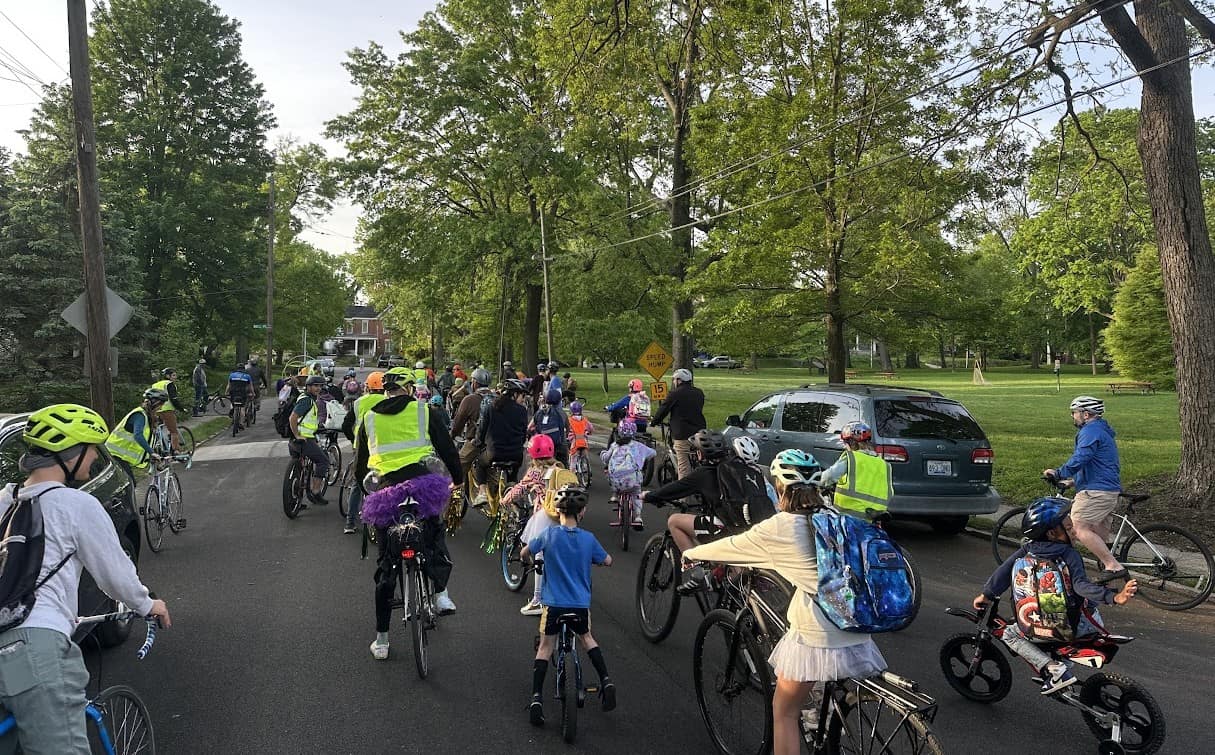
A celebration can bring a community together. What we learn from the trip should shape every other school day, too.
Tomorrow morning, children, families, teachers and community members across the country will lace up their shoes, roll out their bicycles and mobility devices, and make the trip to school together. National Walk & Roll to School Day is meant to be joyful, and it is. The laughter, conversation and energy along the route offer a glimpse of what the journey to school can feel like when children are visible, supported and surrounded by community.
The 2026 National Walk & Roll to School Day takes place October 7. Schools may celebrate in different ways, from a neighborhood walking group to a designated gathering point where families complete part of the trip together. The format matters less than the invitation: notice the route, experience it at a child’s pace and imagine active travel as a normal part of the school day.
The route tells the truth
A special event can make walking and rolling feel possible because adults are present, traffic may be managed differently, and families move as a group. The same route can feel very different on an ordinary Wednesday. A sidewalk may stop without warning. A crossing may require a child to judge several lanes of fast traffic. A curb ramp may be missing, blocked or too steep for someone using a wheelchair. A parent may discover that the shortest path is not the safest one.
Those observations are not reasons to abandon the idea of walking and rolling to school. They are the most useful part of the day. They show communities where encouragement ends and infrastructure must begin. A child should not need a parade of adults to feel protected on the way to school, and a family should not have to be unusually brave to choose an active trip.
Ask more than, ‘Did people participate?’
After the event, schools and local leaders can ask better questions. Where did families have to leave the sidewalk? Which intersections created confusion? Could children and drivers see one another clearly? Did the route work for students with disabilities? Where did vehicle speed change the entire character of the trip? Which families live too far away to walk the full distance but could participate from a safe meeting point?
A simple walking audit can turn those questions into a practical record. Parents, students, school staff, transportation professionals, public health partners and elected officials can travel the route together and document what helps or hinders safe movement. Some concerns may call for long-term investment. Others may be addressed through maintenance, clearer crossings, better arrival procedures, trimmed vegetation, adjusted signal timing or a different location for a school walking group.
The benefits reach beyond the school gate
When children can walk, bike or roll safely, the result is not limited to physical activity. The trip can give young people a growing sense of independence and familiarity with their neighborhood. Families gain another transportation option. Schools may see less congestion at arrival and dismissal. Streets designed with children in mind also tend to work better for older adults, people with disabilities and anyone who needs more time or protection to cross.
Safe Routes to School efforts are strongest when education, encouragement, engineering and community partnership reinforce one another. Teaching children how to cross safely is valuable, but education cannot compensate for a road designed around speeds and distances that exceed human limits. Encouraging families to walk is meaningful, but encouragement rings hollow when the route offers no continuous place to walk.
Let one day open a longer conversation
Walk & Roll to School Day does not have to prove that every child can walk or bike to school tomorrow. Kentucky communities include rural roads, long distances and many different school settings. The day can instead help each community identify what is possible now, what is preventing more families from participating and what a safer future would require.
Celebrate the children who make the trip on October 7. Listen to the families who explain why they cannot. Then carry both the joy and the obstacles into the decisions that follow. One morning is a start. The real measure of success is whether what we learn helps make active travel safer, more comfortable and more ordinary throughout the year.