
Kentucky Trails: Connecting Communities, Health, and Local Economies
Kentucky Trails: Connecting Communities, Health, and Local Economies
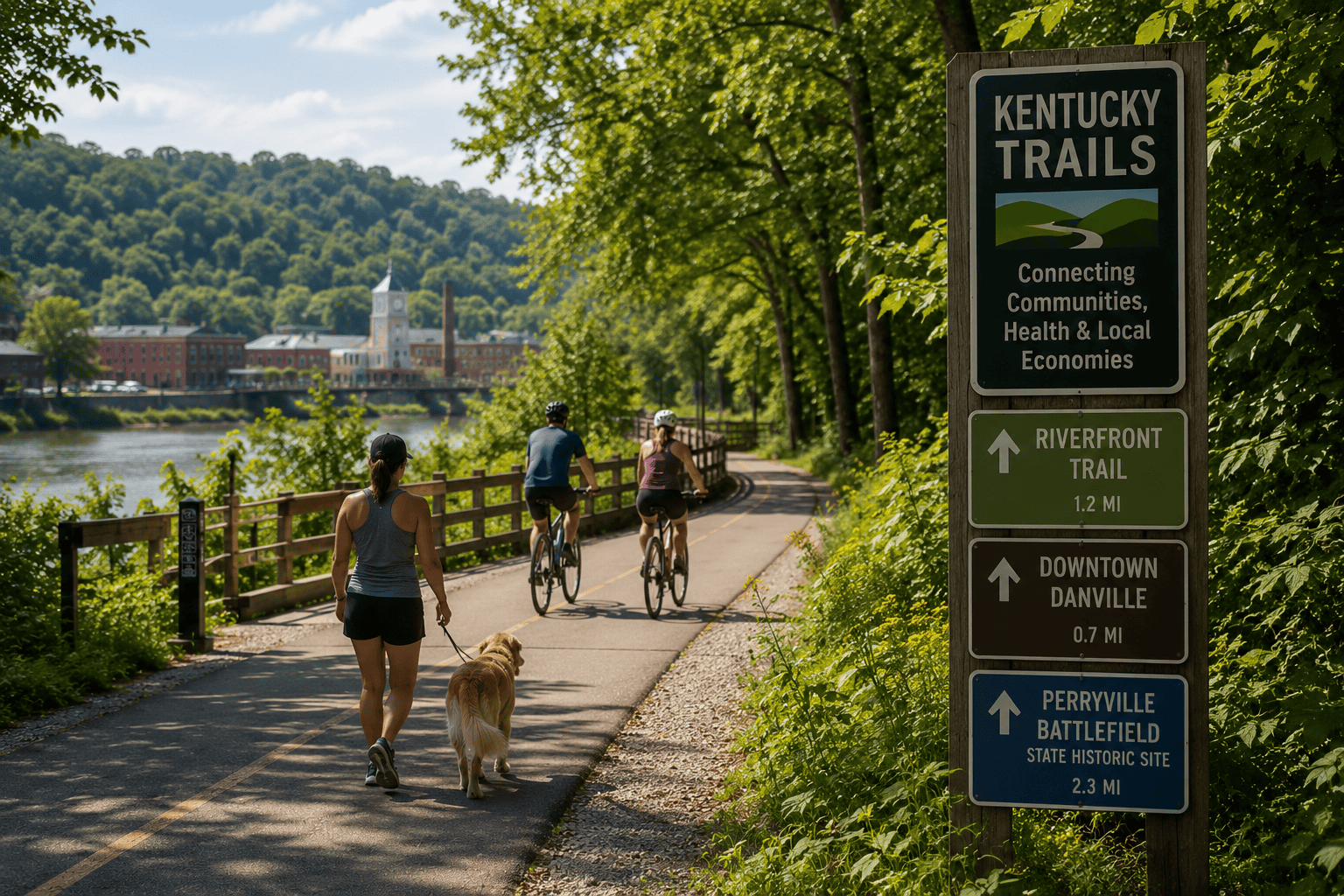
Kentucky is known for its scenic landscapes, historic communities, rolling farmland, rivers, forests, and outdoor recreation opportunities. While many people associate trails with exercise or weekend recreation, their impact extends far beyond physical activity.
Trails connect people to destinations, support local businesses, encourage tourism, and create opportunities for healthier lifestyles. They provide places for residents to walk, run, bike, hike, and explore while also serving as important community assets that contribute to economic development and quality of life.
Across the Commonwealth, communities are increasingly recognizing that trails are more than recreational amenities. They are investments in public health, tourism, transportation, and community vitality.
Trails Bring People Together
One of the greatest strengths of a trail system is its ability to serve a wide range of users.
On any given day, a trail may be used by:
- Families enjoying an evening walk
- Cyclists exploring a new route
- Runners training for an event
- Seniors staying active
- Visitors exploring a community
- Children walking or biking with friends
- Residents commuting between destinations
Unlike many recreational facilities that serve a specific audience, trails create shared spaces where people of different ages, abilities, and interests can enjoy being active.
This broad appeal helps strengthen community connections and encourages more people to spend time outdoors.
Trails Support Healthier Communities
Access to safe places for physical activity plays an important role in public health.Ma ny people struggle to find time for structured exercise programs, but trails make it easier to incorporate movement into daily life. A morning walk, an evening bike ride, or a weekend hike can help individuals stay active while enjoying their surroundings.
Research consistently shows that regular physical activity contributes to improved physical and mental health. Communities that provide accessible opportunities for walking and biking help remove barriers that may prevent people from being active.
Trails create environments where healthy choices become easier and more enjoyable.
Trails Support Local Businesses
The impact of trails extends beyond recreation and health. Visitors who travel to experience a trail system often spend money in local communities. They stop for meals, purchase supplies, visit attractions, stay overnight, and explore nearby businesses.
Communities with well-used trails frequently see benefits for:
- Restaurants and coffee shops
- Retail businesses
- Lodging providers
- Tourism attractions
- Outdoor recreation businesses
- Downtown districts
Even relatively small trail systems can help attract visitors and encourage residents to spend more time in local business districts.
When people walk or bike through a community, they experience it differently. They are more likely to notice local businesses, public spaces, and attractions that might otherwise be missed while traveling by car.
Trails Help Tell Kentucky’s Story
Kentucky’s trails showcase some of the Commonwealth’s most unique assets. Whether traveling through historic downtowns, rural landscapes, riverfronts, forests, or former rail corridors, trail users experience communities in a way that encourages exploration and appreciation.
Many trails highlight local history, culture, natural resources, and community identity. They create opportunities for residents and visitors alike to connect with the places they are traveling through.
In many communities, trails have become destinations in their own right. They help tell the story of Kentucky while creating opportunities for recreation, tourism, and economic activity.
Connections Matter
One of the most important qualities of a successful trail system is connectivity. A trail that connects neighborhoods to parks, schools, businesses, downtown districts, or other community destinations provides value beyond recreation alone. These connections help people reach places safely while reducing barriers to walking and biking.
Communities are increasingly looking at how trails can complement sidewalks, bicycle facilities, greenways, and other transportation infrastructure to create more connected networks. When trails connect people to destinations, they become part of everyday life rather than simply places to visit occasionally.
Building Momentum Across Kentucky
Communities across Kentucky continue investing in trails, greenways, and shared-use paths because they recognize the wide range of benefits these facilities provide. Some projects focus on recreation. Others emphasize tourism, transportation, public health, or economic development. Most achieve some combination of all four. Successful trail projects often begin with a community vision and grow through partnerships among local governments, tourism organizations, public health professionals, businesses, and residents. Over time, these partnerships help transform ideas into lasting community assets.
More Than a Place to Walk or Ride
It can be easy to think of a trail as simply a place to exercise. In reality, trails serve many purposes. They provide opportunities for physical activity, connect people to destinations, support local economies, attract visitors, and strengthen community identity. They create places where families gather, friends connect, visitors explore, and residents experience their communities in new ways.
As Kentucky communities continue investing in active living and outdoor recreation, trails will remain an important part of creating healthier, more connected, and more vibrant places to live, work, and visit. Whether used for a short evening walk, a weekend bike ride, or a multi-day adventure, trails help connect people—not only to destinations, but to the communities that make Kentucky unique.