What Actually Moves a Bike or Walk Project Forward in Kentucky
What Actually Moves a Bike or Walk Project Forward in Kentucky
Communities across Kentucky are increasingly interested in improving walking and biking conditions. Questions come up often: How do we add sidewalks? Where do bike lanes come from? What does it take to make a route safer?
It is easy to assume that these changes begin with construction. In reality, they begin much earlier—with planning, coordination, and a clear understanding of how projects move from idea to implementation.
Most successful bike and walk improvements follow a similar path. It does not happen all at once, and it rarely happens quickly, but the process is consistent. It starts with identifying a need.
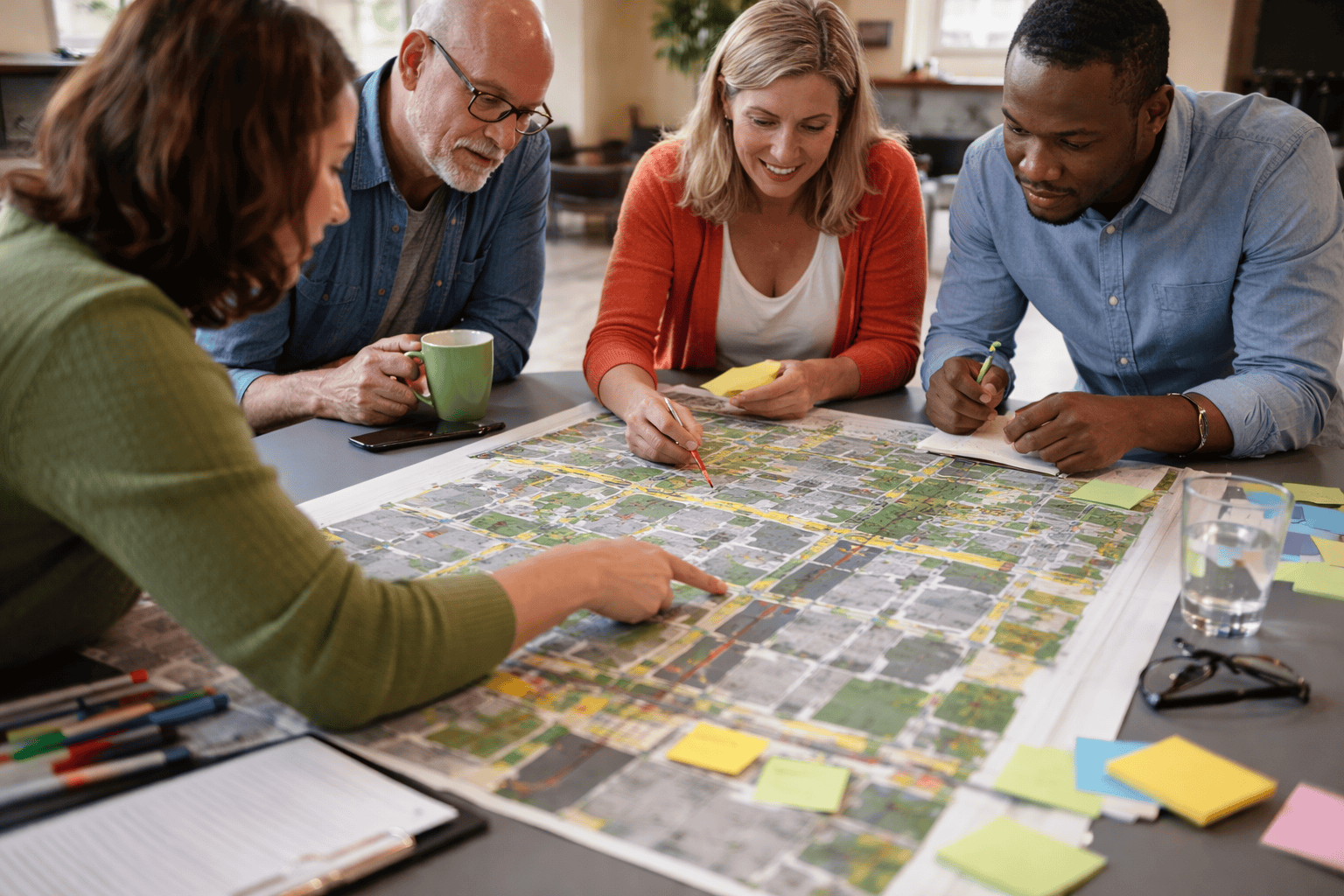
That need may come from residents noticing unsafe crossings, gaps in sidewalks, or difficulty accessing schools, parks, or downtown areas. It may come from local leaders reviewing crash data or recognizing barriers that limit how people move through the community. In many cases, it is a combination of both lived experience and data that brings attention to an issue. From there, documentation becomes critical.
Photos, traffic patterns, community feedback, and existing conditions all help define the problem in a way that others can understand and act on. Without that clarity, it is difficult to move a project forward or compete for funding. Clear documentation turns a concern into something that can be evaluated, prioritized, and addressed.
Planning is the next step. Local plans—whether they are walk and bike master plans, safety studies, or broader transportation plans—play a central role in determining what projects move forward. These plans help communities organize priorities, align with regional and state efforts, and position themselves for funding opportunities. Projects that are included in formal plans are far more likely to advance than those that are not.
Partnerships also matter. Improving walking and biking conditions often involves multiple entities, including city and county governments, area development districts, public health partners, and the Kentucky Transportation Cabinet. Understanding who is responsible for a roadway or project area is an essential part of the process. Progress depends on coordination, communication, and shared goals across these groups.
Funding follows planning. Projects are typically supported through a combination of local, state, and federal funding sources. In many cases, funding is tied to projects that are already identified in plans and supported by data. This is why preparation matters. Communities that take the time to plan and document their needs are better positioned to access funding when opportunities arise.
None of this is immediate. Large-scale improvements can take years to move from concept to construction. Even smaller changes require time, coordination, and persistence. While that can be frustrating, it also reflects the level of care and review that goes into building infrastructure that is safe, effective, and lasting.
At the same time, progress does not always require large projects. Communities often begin by addressing smaller gaps: improving crossings, adding signage, enhancing visibility, or connecting short segments of sidewalk or trail. These incremental improvements can have a meaningful impact and help build momentum for larger efforts over time.
For communities looking to move forward, the most important step is not starting with a solution. It is starting with a clear understanding of the process.
When communities recognize how projects happen, they are better equipped to participate in planning conversations, advocate effectively, and work with partners to move ideas forward.
Bike Walk Kentucky supports communities throughout this process. Through education, workshops, and ongoing engagement, we help local leaders and residents understand how to identify opportunities, navigate systems, and take practical steps toward safer, more accessible environments.
Improving walking and biking conditions is not a single decision or a single project. It is a process. And when that process is understood, progress becomes possible.