
The Roundabout Moment: How a Joyful Morning Commute is Reshaping Kentucky Streets
The Roundabout Moment: How a Joyful Morning Commute is Reshaping Kentucky Streets
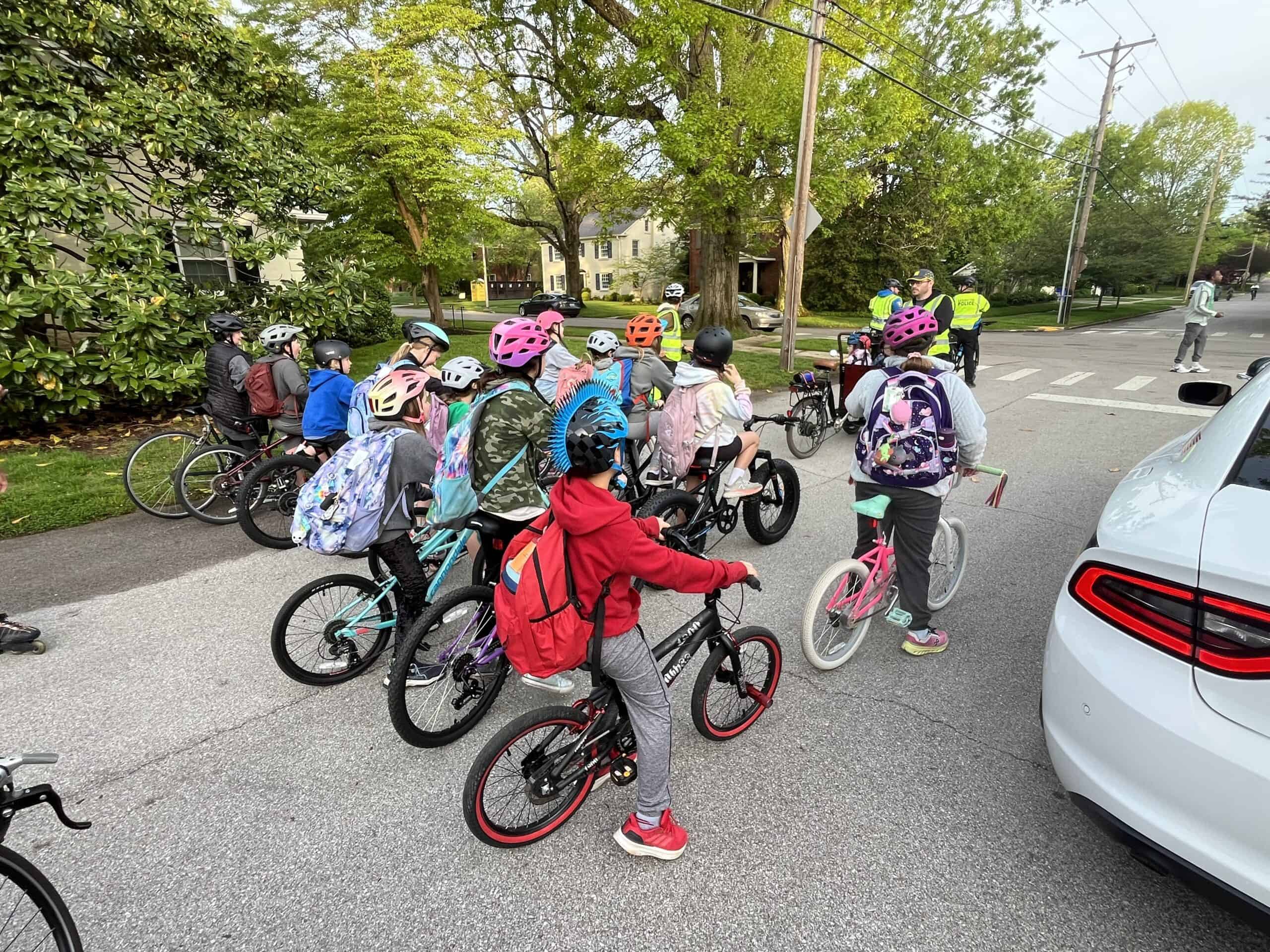
The morning air at Woodland Park in Lexington is filled with more than birdsong; it carries 1980s pop music, the shimmer of a bubble machine, and the rhythmic clicking of dozens of bicycle chains. What began with one child asking to ride his bike to school has transformed into the Ashland Elementary “Bike Bus”—a rolling community proving that active living is about more than fitness; it’s about freedom.
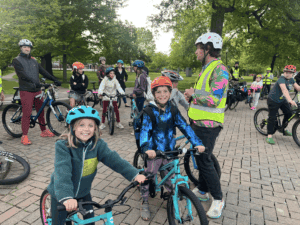
That child was the son of Lexington father and community advocate Griffin VanMeter. In a family that already enjoyed biking together, the request felt possible and meaningful.
Around the same time, Griffin had become inspired by the growing national bike bus movement and the joy, confidence, and community those rides seemed to create.
The broader vision crystallized during a trip to Portland. He stood at a large traffic circle and watched as two separate bike bus routes converged. “I was just weeping because there were so many kids,” Griffin recalled. “It was very much just the simple act of riding to school together—taking back the streets.”
From One Family to a Community Movement
While Lexington, like many cities, still relies heavily on car-centered transportation, the Ashland neighborhood provided a testing ground due to its connected neighborhood streets. The “bus” officially launched during National Bike & Roll to School Day in May 2025, drawing hundreds of participants, including the mayor and school superintendent.
Today, the impact is visible in the confidence and joy carried by the children who ride each morning. Organizers say the morning ride helps students arrive at school more focused, connected, and ready for the day. For Griffin’s son, the bike bus became a gateway to independence; he now often leaves early to ride solo, having gained the confidence to navigate his neighborhood on two wheels.
The “Hero-crats” and the Policy Pivot
A key lesson from the Ashland success is that joy leads to advocacy. By riding the same routes daily, parents and students have become firsthand experts on street safety. They see exactly where crossing challenges exist and where safer connections are still needed.
This “lived experience” has turned parents into civic advocates. Working alongside dedicated city and school officials—referred to as “hero-crats”—the group helped launch a local Safe Routes to School coalition. This partnership has already:
• Secured seed capital from council members to pursue federal grants for district-wide safety audits.
• Inspired four other Lexington schools to start their own bike buses.
• Shifted driver behavior, with local motorists now recognizing the “bus” and helping to block traffic so the train of children can pass safely.
“If you need police escorts to help kids ride their bikes to school safely, it’s a sign communities still have work to do to make active transportation feel safe and accessible,” says Griffin. “The bike bus opens the door to those larger conversations about community design.”
The Strategic Bridge: From Movement to Master Plan
As a component of statewide active living initiatives, these stories prove a vital point: active living doesn’t always require a multi-million dollar infrastructure project to start. It starts with a child’s question and a community’s “yes.”
Through support of the SPAN CDC grant, these organic community movements are being used to bridge the gap toward formal master planning. By collecting data and “impact narratives” from successful models like Lexington, evidence-based case studies are developed to inspire and guide leaders in every corner of the state.
Starting a Local Movement
Griffin’s advice to other Kentucky communities is simple:
• Start small.
• One family is a bike bus: A crowd is not required to begin.
• Make it visible: Music, bubbles, and documentation help others see what is possible.
• Invite the community: Neighbors and advocates are often waiting for a reason to help.