
A Roadway Safety Strategy Cannot Leave People Behind
A Roadway Safety Strategy Cannot Leave People Behind
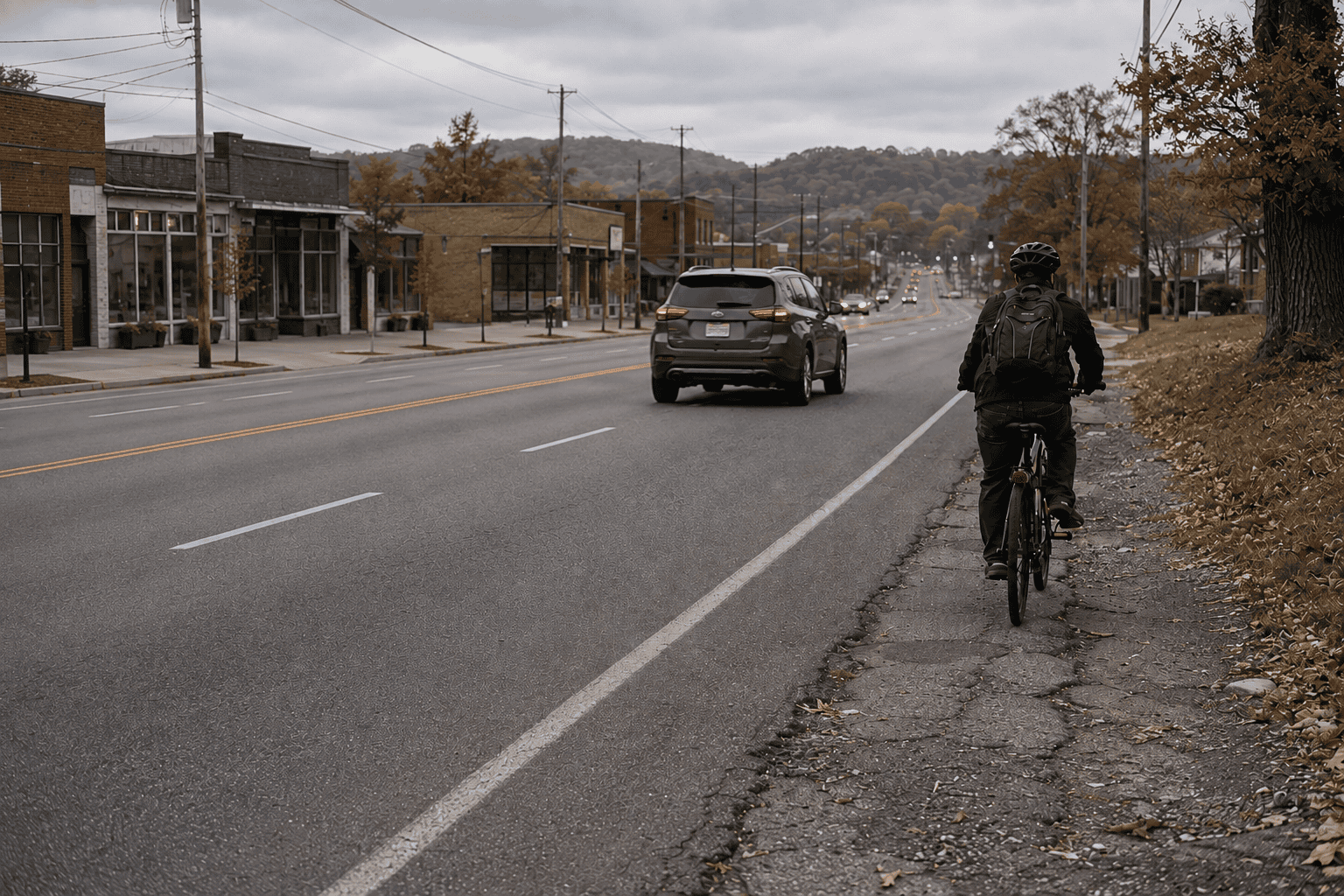
A national roadway safety strategy should answer a basic question: How will we prevent people from being killed or seriously injured as they move through their communities? That question includes everyone using the transportation system: people inside vehicles and people outside them, children walking to school, workers bicycling to a job, older adults crossing a wide road, and people using wheelchairs or other mobility devices.
The newly released National Roadway Safety Strategy retains an important goal: driving roadway fatalities toward zero. The idea that no level of roadway death is acceptable should transcend political administrations. A strategy, however, is meaningful only when its priorities, actions and measures show how the country intends to reach that goal.
Important protections have faded from view
The League of American Bicyclists has raised serious concerns about what the new strategy leaves out. The document is substantially shorter than the 2022 strategy and includes fewer key activities. More importantly, it no longer treats safer speeds as a central objective and provides little attention to the safety of people bicycling, walking, rolling or using mobility devices.
Those omissions are not abstract policy differences. Speed determines whether a driver has time to react, whether a crash can be avoided and whether the human body can survive the impact. The design of a road influences the speed people choose, the visibility of someone crossing and the amount of protection available when a mistake occurs. People outside a vehicle have little physical protection of their own. A safety strategy that minimizes speed management and vulnerable road users steps away from some of the most fundamental conditions shaping crash severity.
Human error is predictable; death should not be
The Safe System Approach begins with two realities: people make mistakes, and the human body has a limited ability to withstand crash forces. A responsible transportation system anticipates those realities. It uses safer speeds, safer road design, safer vehicles, safer behavior and effective post-crash care as overlapping layers of protection. When one layer fails, another should help prevent a fatal outcome.
This differs from an approach that places nearly all responsibility on individual road users. Education and enforcement have roles, but telling people to be careful cannot overcome every high-speed crossing, missing sidewalk, unprotected bicycle route or intersection designed primarily to move vehicles quickly. A person can follow every rule and still be placed in danger by a system that provides no margin for error.
Kentucky communities still have choices
Federal direction affects funding, research, technical guidance and the priorities communicated across the transportation profession. Kentucky should pay attention to those changes and speak clearly about the need to protect all road users. At the same time, state and local leaders do not have to wait for a perfect national strategy before acting.
Communities can adopt Complete Streets policies and follow them through project design. They can use crash data and community experience to identify dangerous corridors. They can build connected sidewalks, improve crossings, provide accessible pedestrian signals, create protected space for bicycling and design streets for speeds appropriate to the people and places around them. They can include residents who walk, bicycle, use transit or travel with disabilities early enough to influence a project rather than merely react to it.
They can also measure what they do. A commitment to safety should be visible in project selection, design decisions, budgets, timelines and public reporting. The goal is not to add a bicycle lane or crosswalk wherever it is easiest. It is to identify where people face the greatest risk and use proven tools to reduce that risk.
Zero must include everyone
It is encouraging that a national strategy still states that zero roadway deaths is the goal. But zero cannot be achieved by leaving entire groups of road users at the edge of the plan. People walking and bicycling are not special interests outside the transportation system. They are using it. People using wheelchairs and mobility devices are not an optional audience. Their ability to travel safely is part of whether the system works.
Bike Walk Kentucky will continue advocating for transportation decisions that recognize human vulnerability, manage speed and provide safe, connected and accessible routes. We invite local leaders, transportation professionals and residents across the Commonwealth to do the same. Ask who is named in a safety plan, whose experience informed it, which proven measures it supports and how progress will be evaluated.
A strategy should do more than express concern about roadway deaths. It should make clear whose lives count, identify the conditions placing them at risk and commit to actions strong enough to change those conditions. If the goal is truly zero, no one can be left behind.