
Shorter Days, Safer Routines: Preparing for Late-Summer Walking and Biking in Kentucky
Shorter Days, Safer Routines: Preparing for Late-Summer Walking and Biking in Kentucky
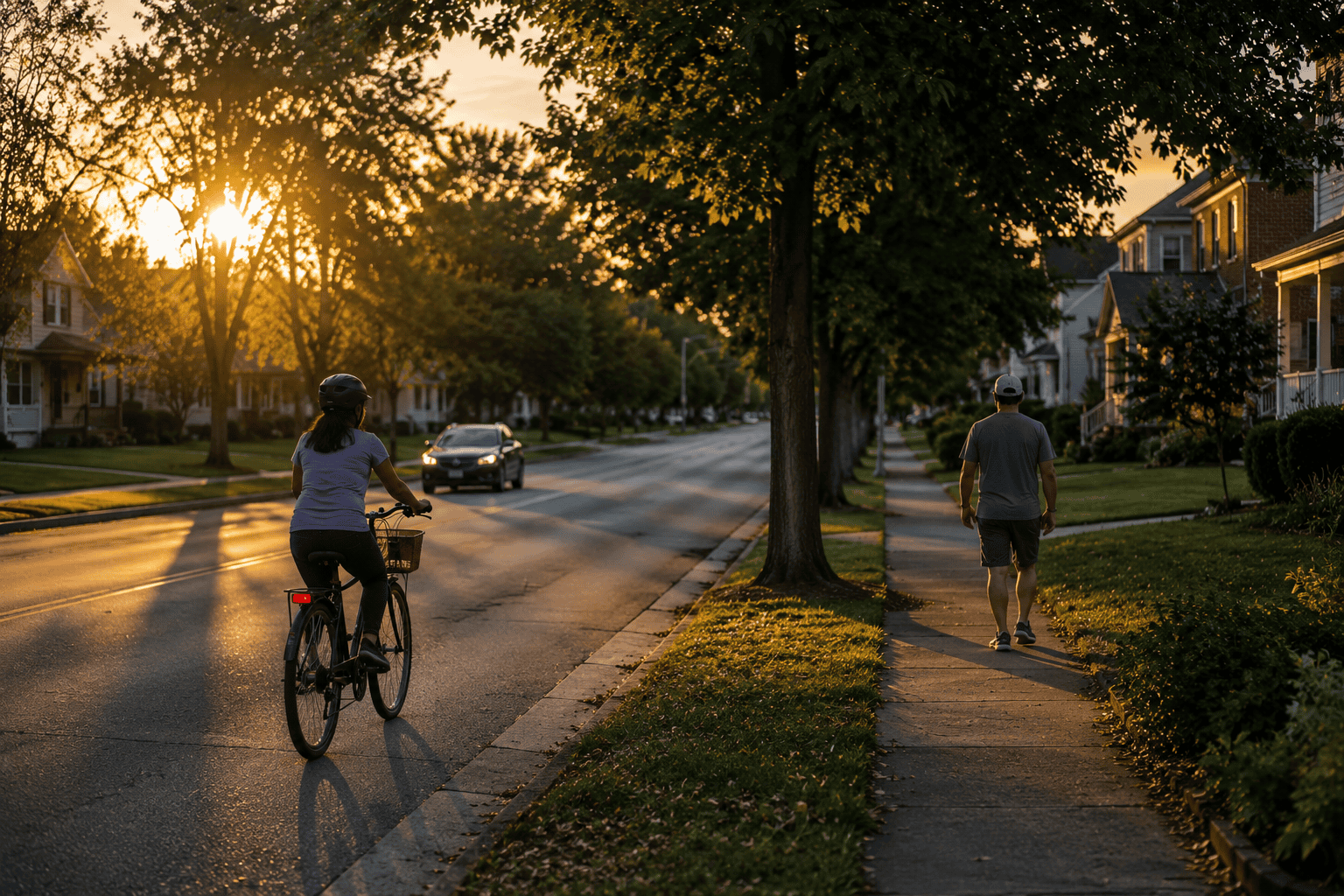
Late summer has a way of sneaking up on us. The weather may still feel warm. Families may still be squeezing in evening walks, bike rides, park visits, and time outdoors. But the light is already beginning to change. Sunset comes earlier. Morning routines feel different. School schedules reshape traffic patterns. Activities that felt bright and easy in June may now happen closer to dusk.
That makes late summer an important time to adjust our walking, biking, and driving habits.
Safety is not only about what we do in the middle of winter or during the darkest months of the year. It is also about noticing transition points, especially when routines change before we realize conditions have changed around us.
For people walking, biking, driving, or helping students move through their communities, this is a good time to pause, look ahead, and build safer habits before fall fully arrives.
Light Changes Before Our Habits Do
One of the challenges of late summer is that our routines often stay the same while daylight does not.
A bike ride that started in full daylight a few weeks ago may now end in lower light. An after-dinner walk may feel different by the time you head home. Students may be walking to practice, work, or activities as the sun sits lower in the sky. Drivers may be navigating glare, shadows, and busier evening traffic at the same time. These changes can affect visibility, reaction time, and comfort for everyone using the road.
That does not mean people should stop walking or biking. It means we should adjust with the season. Small changes in timing, route choice, lighting, clothing, and driver awareness can help keep people safer as days grow shorter.
For Walkers: Make the Route Work for the Conditions
Walking is one of the simplest ways to build movement into daily life, but the safest route may change as daylight changes.
A route that feels comfortable in bright daylight may have poor lighting in the evening. A crossing that feels manageable during quiet hours may feel more stressful during after-school or after-work traffic. A sidewalk gap may be easier to navigate in daylight than at dusk.
Late summer is a good time to take a fresh look at walking routes. People walking can support their own safety by choosing routes with better lighting, using sidewalks or paths where available, crossing at predictable locations, and staying alert near driveways, parking lots, and intersections.
It also helps to think about timing. Leaving a little earlier for an evening walk or shortening a route as sunset approaches can make a difference.
But safety should not depend only on individual choices. Communities also have a role to play by maintaining sidewalks, improving crossings, addressing lighting concerns, and designing streets that protect people walking at different times of day.
For Bicyclists: Prepare Before the Ride Starts
For bicyclists, late summer is a good reminder to check equipment and plan ahead. A ride that begins in daylight may not end that way. Lower light can make it harder for drivers to notice people on bikes, especially near intersections, curves, shaded roads, or areas with visual clutter.
Before heading out, bicyclists can check that lights are charged or working, reflectors are in place, tires are properly inflated, and routes are appropriate for the time of day. Choosing familiar roads, trails, or lower-stress routes may be especially helpful as daylight fades.
Predictability matters too. Riding in a straight line, signaling turns, obeying traffic controls, and avoiding sudden movements help others understand what to expect.
Late summer is also a good time for families to revisit bike safety with students. As school schedules return, students may be riding to school, practice, work, or a friend’s house during busier traffic periods than they experienced during summer break. A quick equipment check and route conversation can help make those trips safer and more comfortable.
For Drivers: Expect People to Be Out Later Than the Light Allows
Drivers play an important role in late-summer safety. Warm weather often keeps people outside later in the day, even as daylight shortens. That means drivers should expect people walking and biking near neighborhoods, schools, parks, downtown areas, and rural roads during lower-light conditions.
Late afternoon and evening driving can also bring sun glare, long shadows, school traffic, buses, pedestrians, bicyclists, and people entering or leaving driveways and parking lots.
Drivers can help by slowing down, scanning carefully at crossings and intersections, allowing more space when passing bicyclists, and avoiding distractions. It is especially important to look for children, older adults, and people using mobility aids, who may move more slowly or be harder to see in certain conditions.
Safety improves when drivers treat every street as a place where people may be walking or biking, not just driving.
Safer Routines Support Health and Community Life
Walking and biking are part of a healthy, active Kentucky. They help people build movement into daily routines. They connect families to schools, parks, trails, downtowns, local businesses, and neighbors. They support independence for people who do not drive or who prefer transportation options beyond a car.
But people are more likely to walk and bike when they feel safe doing so.
That is why seasonal transitions matter. If communities want walking and biking to be practical year-round, safety has to be considered throughout the year, including the in-between seasons when conditions change gradually.
Late summer is one of those moments. By adjusting routines now, individuals and communities can help keep walking and biking visible, accessible, and safe as fall approaches.
Seasonal Transitions are Safety Moments
Late summer is a season of transition. School is back. Schedules are shifting. Traffic patterns are changing. Daylight is fading earlier. That makes this the right time to build safer routines.
For walkers, that may mean choosing routes and times with care.
For bicyclists, it may mean checking equipment and planning for changing light.
For drivers, it means slowing down, staying alert, and expecting people walking and biking to be present.
These simple adjustments can help make late summer and early fall safer for everyone.
Keep Moving With Care
Shorter days do not have to mean fewer opportunities to walk and bike. They simply remind us to move through our communities with more care.
Bike Walk Kentucky encourages Kentuckians to keep walking, biking, driving attentively, and adjusting with the season. A safer fall starts with the habits we build now.