The People Behind Progress: Why Active Living Takes a Community
The People Behind Progress: Why Active Living Takes a Community
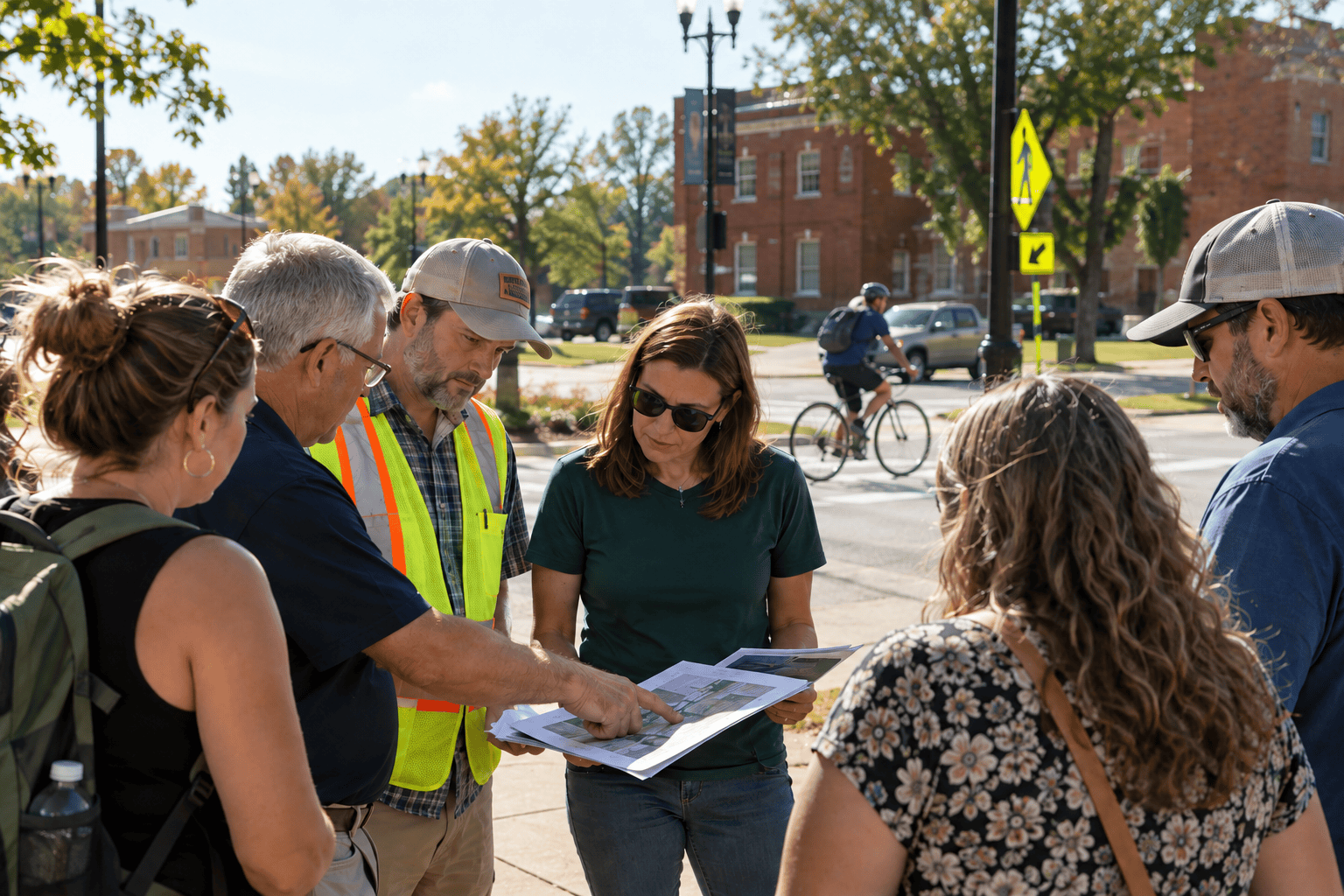
A safer crosswalk may look like a simple improvement. By the time the paint hits the pavement, however, a lot may have happened behind the scenes.
A resident identified a problem. A local official listened. A planner determined who was responsible for the road. Transportation professionals evaluated possible solutions. Public health partners helped demonstrate why the improvement mattered. Funding had to be identified. Community support helped keep the need visible.
That is the reality behind many of the changes that make Kentucky communities safer and more welcoming for people who walk and bike. Progress is rarely the work of one person. It happens when the right people work together.
Residents Bring Lived Experience
The people who use a community’s streets, sidewalks and trails every day see things that may not appear on a map or in a planning document. They know where drivers routinely fail to yield. They know which sidewalk is difficult to navigate with a wheelchair or stroller. They know where children are walking to school, where a trail connection is missing and which intersections people avoid.
That lived experience is an important part of understanding how a transportation network actually functions. Residents can also help document needs through photographs, community feedback and participation in local planning processes. Their involvement helps ensure that transportation decisions reflect the experiences of the people who use the system.
Local Leaders Help Turn Needs Into Priorities
City and county officials play an important role in determining how local resources are used and which projects move forward. They also hear from residents.
When community members communicate clearly about a walking or bicycling concern, local leaders can help determine where responsibility lies, connect people with the appropriate departments and consider needs as budgets and plans are developed.
Not every improvement can happen immediately. But needs that are identified, documented and included in local planning have a much better chance of becoming part of future decisions.
Planners and Transportation Professionals Help Build the Path Forward
Once a need has been identified, technical expertise becomes essential. City and county planners, Kentucky Transportation Cabinet district staff, Area Development Districts, engineers and other transportation professionals can help communities understand what is possible and what steps may be required.
Depending on the project, that might include a walk/bike master plan, feasibility study, corridor study, safety audit, ADA transition plan or other planning and design work.
These tools do more than produce documents. They help communities establish priorities, evaluate solutions and build credibility when seeking funding.
Public Health Belongs in the Conversation
Transportation decisions also affect health. Active living integrates physical activity into everyday routines, whether that means walking to school, biking to work, reaching a park or using a sidewalk or trail for an everyday trip. People are more likely to make those choices when they have places where they can do so safely.
That is why public health professionals are important partners in conversations about transportation and community design. They help connect decisions about streets, sidewalks, trails and access with larger goals around physical activity, chronic disease prevention and quality of life.
A sidewalk is infrastructure. It can also be an opportunity for someone to incorporate movement into daily life. Both perspectives matter.
Schools, Businesses and Community Organizations Have a Role, Too
The circle of partners can grow even wider. Schools understand how students travel to and from campus. Tourism organizations see the potential of trails and bicycle routes to attract visitors. Chambers of commerce and businesses understand how accessible, inviting places can support local economic activity. Hospitals and health organizations see the consequences when opportunities for safe physical activity are limited. Running and bicycling clubs, neighborhood organizations and advocacy groups can bring additional experience and community connections.
Each partner sees the issue from a slightly different perspective. Bringing those perspectives together can reveal opportunities that might otherwise be missed.
Connection Is Part of the Work
When we talk about improving walking and bicycling in Kentucky, it can be tempting to focus primarily on the finished product: the sidewalk, trail, crossing, bike facility or safer street. Infrastructure is only part of the story. Before many improvements can happen, people have to find one another.
Residents need to know who to contact. Local leaders need access to information and technical resources. Community organizations need partners. Transportation and public health professionals need opportunities to hear directly from the communities they serve.
Creating those connections is part of building a stronger active living network across Kentucky. It is also central to Bike Walk Kentucky’s mission.
We work with local advocates, governments and organizations to educate and advocate for safe bicycling and walking across the Commonwealth. That means sharing information and resources, but it also means helping strengthen the relationships that allow good ideas to move forward.
Progress Is Collaborative
There is no single formula for creating a more walkable or bike-friendly Kentucky community. There is, however, a pattern.
Someone sees an opportunity. Someone starts a conversation. Others bring knowledge, resources and different perspectives to the table. A need becomes a priority. A priority becomes a plan. And, with persistence and partnership, a plan can eventually become something people experience in their everyday lives.
The infrastructure may be what we see. The people working together are what make it possible.
Across Kentucky, those people are residents, advocates, planners, public health professionals, transportation staff, local officials, educators, business leaders and many others who believe their communities can become safer, healthier and more accessible.
Bike Walk Kentucky is proud to be part of that network and to help bring people together around a shared goal: making walking and bicycling safer and more accessible for Kentuckians.