Safe Routes Start Close to Home: Helping Kentucky Students Walk and Bike to School
Safe Routes Start Close to Home: Helping Kentucky Students Walk and Bike to School
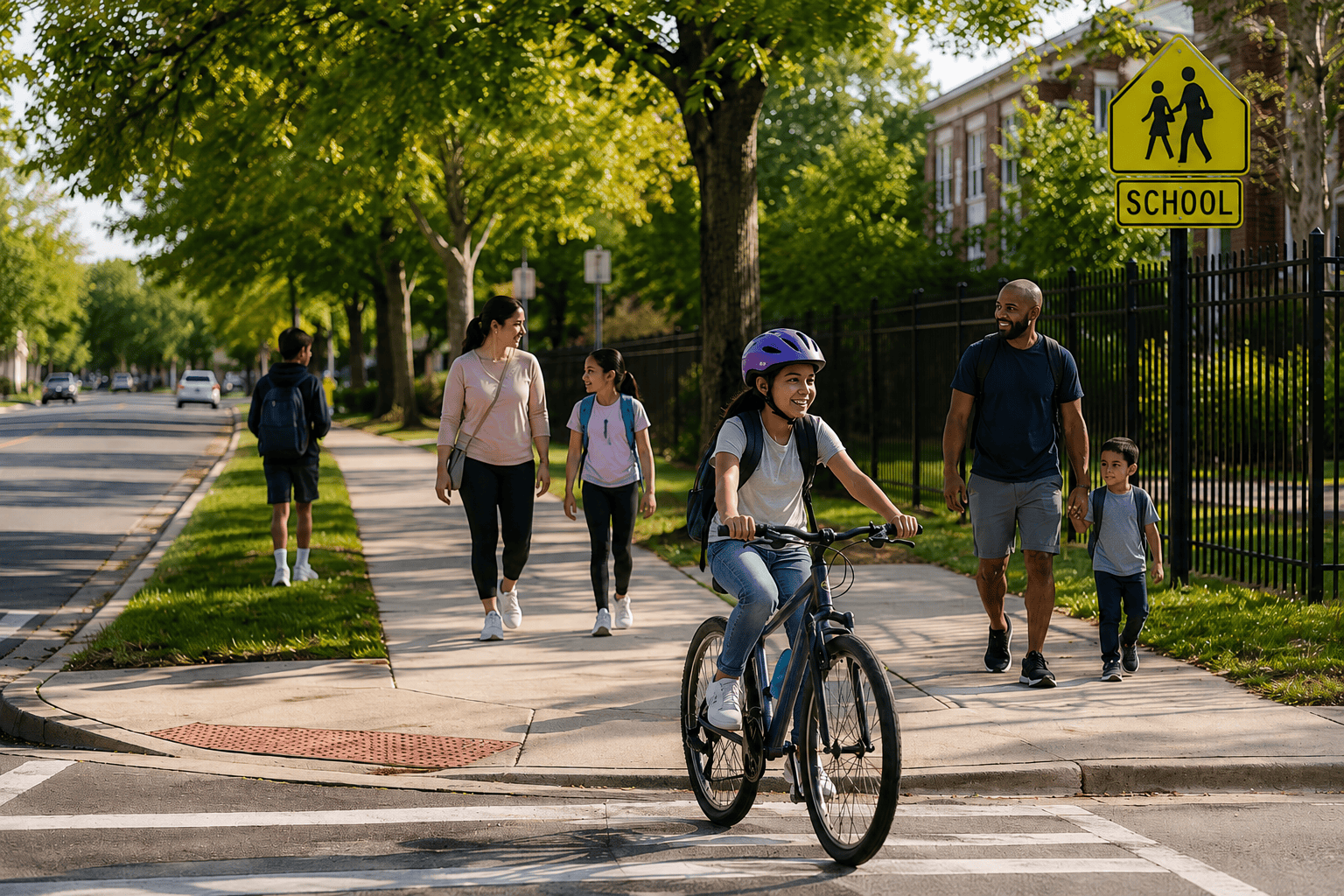
For many Kentucky students, the school day begins before they reach the classroom. It may begin at a bus stop, along a sidewalk, across a neighborhood street, through a school parking lot, or on a bike ride from home. Even students who are driven to school often walk for part of their trip once they leave the car.
That is why the route matters.
A safe school route is not only about distance. It is about whether a student can move from one place to another in a way that feels visible, predictable, and protected. It is about the sidewalks, crossings, intersections, driveways, shoulders, traffic speeds, lighting, and school arrival patterns that shape the trip.
When communities take a closer look at how students actually move, they can begin identifying practical ways to make walking and biking safer.
The Safest Route May Not Be the Shortest Route
Families often think first about the quickest way to school, but the shortest route is not always the safest. A better route may use a calmer neighborhood street, a marked crossing, a sidewalk with fewer gaps, or an intersection where drivers have better visibility. For students biking, a better route may avoid higher-speed roads, complicated turns, or places where traffic feels unpredictable.
Before the school year settles into routine, families can walk or bike the route together and ask:
- Where will the student cross the street?
- Are there sidewalks or paths for most of the trip?
- Are there places where drivers may not expect to see a child?
- Are there driveways, parking lots, or intersections that need extra attention?
- Does the route feel different in the morning than it does in the afternoon?
- Is there another route that may be slightly longer but safer?
Practicing the route helps students build confidence and helps families notice concerns before the school day feels rushed.
Look Closely at Crossings
Crossings are one of the most important parts of any walking or biking route. A route may feel comfortable until a student reaches a busy street, a wide intersection, or a crossing where drivers do not consistently slow down. For younger students especially, judging speed and distance can be difficult.
Families and schools can help students identify where to cross, when to wait, and how to make sure they are seen. Students walking should be encouraged to stop, look in all directions, and avoid stepping into the street until traffic has stopped or the path is clearly safe. Students biking may need to dismount and walk their bike across certain crossings, depending on age, comfort, and conditions.
Communities can also look at whether crossings near schools are clear, visible, and easy to understand. Faded markings, blocked sight lines, confusing traffic patterns, or high vehicle speeds can make a crossing feel unsafe even when it is technically allowed.
Sidewalk Gaps Change the Trip
A sidewalk that ends suddenly can change everything about a student’s route. Students may be pushed onto a shoulder, into grass, across private property, or closer to traffic than feels safe. Families with strollers, students with mobility needs, and children walking in groups may face even greater challenges.
Sidewalk gaps are not always easy to fix quickly, but they are important to document. A short missing segment may be the reason families avoid walking or biking altogether.
Communities can begin by identifying where sidewalks end near schools, parks, neighborhoods, libraries, and bus stops. Photos, maps, and family feedback can help show why a gap matters and who is affected by it.
Bike Routes Need Realistic Planning
For students who bike, a safe route should match the student’s age, skill level, and comfort. Not every road is a good fit for every rider. Some students may be comfortable riding on a quiet neighborhood street, while others may need a parent, caregiver, or group ride to feel safe. Where sidewalks are used by younger children on bikes, families should talk about yielding to people walking, slowing down near driveways, and being careful at intersections.
Before a student bikes to school, families can check:
- Does the bike fit the student?
- Is the helmet worn correctly?
- Are the tires, brakes, chain, and reflectors in good condition?
- Is there a safe place to park the bike at school?
- Does the student know where to stop, signal, and cross?
- Is the route appropriate for the student’s current skill level?
Biking to school does not have to be all or nothing. Some families may choose one day a week, a short portion of the trip, or a parent-supported ride while students build confidence.
Arrival and Dismissal Deserve Attention
School arrival and dismissal can be some of the most complicated times of day. Cars, buses, walkers, bicyclists, staff, and families may all be moving through the same space within a short window of time. Even small areas of confusion can create risk.
Schools can support safer movement by communicating clearly with families, keeping walking paths visible, discouraging distracted driving in drop-off areas, and listening when families raise concerns about traffic flow or unsafe behavior.
Families can help by being patient, following school traffic patterns, avoiding sudden stops or turns, and watching carefully for students walking or biking near parking lots and driveways. The goal is not just to move cars through quickly. The goal is to help every student arrive and leave safely.
Document What Needs Attention
One of the most helpful things a family, school, or community can do is document what they see.
That may include:
- A sidewalk that ends before reaching school
- A crossing where drivers do not slow down
- A road where traffic speeds feel too high
- A bus stop without a safe place to stand
- A bike parking area that is missing or hard to access
- A driveway or parking lot where visibility is poor
- A route students already use, even without proper infrastructure
Documentation does not have to be complicated. A photo, a short note, a marked-up map, or a list of repeated concerns can help start a productive conversation. When concerns are documented clearly, local officials, school leaders, transportation partners, and community advocates have a stronger starting point for identifying solutions.
Small Improvements Can Matter
Not every safety improvement requires a major construction project. Some communities may be able to begin with maintenance, clearer signage, refreshed markings, trimmed vegetation, better communication, improved bike parking, or changes to arrival and dismissal procedures.
Other needs may require longer-term planning, funding, engineering review, or coordination with city, county, or state transportation partners.
Both types of progress matter. A safer route is often built through a series of steps. The important thing is to identify the need, involve the right partners, and keep the conversation moving.
Safe Routes Support the Whole Community
When routes are safer for students, they often become safer for everyone. A better crossing near a school can also help an older adult reach a park. A sidewalk connection can help a family walk to a library or store. A calmer street can make a neighborhood feel more welcoming. A more practical bike route can support students, workers, and recreational riders.
Safe school routes are part of a larger community picture. They support health, independence, transportation choice, accessibility, and quality of life.
Start With One Route
Kentucky communities do not have to solve every transportation challenge at once. Start with one route.
Walk it. Bike it. Map it. Notice where students already move and where the trip becomes difficult. Talk with families, school leaders, local officials, public health partners, and community advocates. Identify one crossing, one sidewalk gap, one confusing arrival pattern, or one missing connection that deserves attention.
Safe routes start close to home. And when communities make it safer for students to walk and bike, they help build healthier, more connected places for everyone.