Built for a Lifetime: Why Walkable Communities Matter at Every Age
Built for a Lifetime: Why Walkable Communities Matter at Every Age
Healthy aging is often discussed as a matter of personal choices, including eating well, staying active and receiving appropriate healthcare. Those choices matter, but the places where people live also shape whether remaining active and independent is realistic.
A person may want to walk regularly but live on a street without sidewalks. An older resident may be physically capable of reaching a nearby store but unable to safely cross the road between home and that destination. Someone using a wheelchair, walker or cane may encounter broken pavement, missing curb ramps or crossing signals that do not provide enough time.
These are not simply inconveniences. They can determine whether people continue participating in community life or gradually become more isolated.
Active living should remain possible as people age
Physical activity can help older adults maintain mobility, manage chronic health conditions and continue living independently. Federal guidelines encourage older adults to combine aerobic, muscle-strengthening and balance activities based on their abilities, with walking identified as one accessible way to add movement to daily life.
Formal exercise programs can be valuable, but active living includes much more than a scheduled workout. It can mean walking to a neighbor’s home, rolling to a park, reaching a bus stop, visiting a downtown business or taking a short trip to the library.
When those destinations are safely connected, movement becomes part of the day rather than another task that requires transportation, equipment or a membership. When they are not connected, even a short trip may require a car or assistance from someone else.
A walkable community supports physical activity while also protecting something equally important: independence.
The details determine whether a route works
A sidewalk on a map does not necessarily mean a route is usable. Its condition, width, continuity and surroundings all affect whether someone can travel with confidence.
Cracked pavement and abrupt changes in elevation can create tripping hazards. Utility poles, overgrown vegetation and poorly placed signs may narrow the available space. Missing curb ramps can make a crossing impossible for a wheelchair user and difficult for someone using a walker or pushing a stroller.
Crossing time matters as well. Signals designed around the pace of a faster adult may leave an older pedestrian stranded in the roadway when the light changes. Long crossings without refuge islands can feel intimidating, particularly on wide or busy streets.
Lighting, visibility and maintenance also influence whether people feel comfortable using a route. A sidewalk covered by leaves, snow or debris may become inaccessible even when the underlying infrastructure is sound.
These details are sometimes treated as minor additions to a road project. For the person relying on them, they determine whether the route functions at all.
Designing for older adults improves access for everyone
Communities do not need separate transportation systems for every age group. Many of the features that help older residents also improve safety and convenience for children, people with disabilities, families and anyone recovering from an illness or injury.
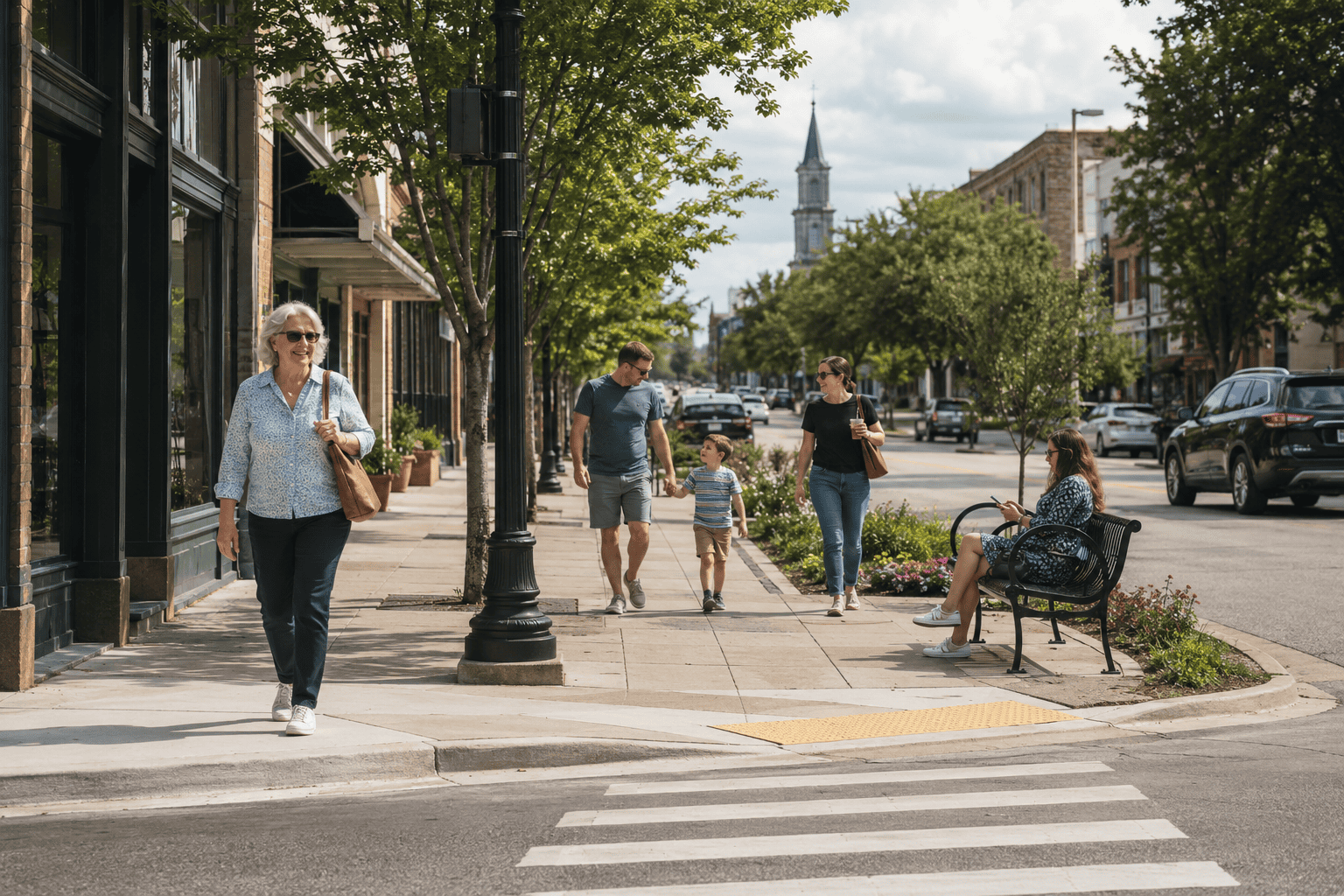
A curb ramp helps someone using a wheelchair, but it also assists a parent pushing a stroller. A pedestrian island gives an older adult time to cross a wide street, while also helping a child who misjudges the signal. A bench offers a resting place to someone with limited stamina and creates a more welcoming public space for everyone.
Clear signs, slower traffic, visible crossings and good lighting reduce uncertainty for all road users. Connected sidewalks make it easier for students to walk to school, employees to reach work and residents to visit businesses without driving.
Designing for the person who needs the most time or support does not lower the quality of a transportation system. It makes that system more useful to more people.
Mobility supports connection as well as health
The benefits of walkable communities are not limited to physical fitness. Being able to leave home independently can help people maintain social relationships, participate in civic life and reach the places that give their days meaning.
A trip to a coffee shop may provide conversation. A walk through the neighborhood may create regular contact with friends. Access to a library, park, faith community or senior center can reduce isolation and strengthen a person’s sense of belonging.
The Centers for Disease Control and Prevention describes healthy aging as more than the absence of disease. It also involves well-being, function and continued social engagement.
Transportation decisions can either support that engagement or quietly restrict it. When driving is the only practical way to reach daily destinations, losing the ability or desire to drive may also mean losing independence.
Communities that provide safe ways to walk, roll, bicycle to reach public transportation offer residents more than mobility. They offer additional ways to remain connected.
Fall prevention extends beyond the home
Fall prevention efforts often focus on hazards inside the home, such as loose rugs, poor lighting and missing handrails. Those concerns are important, but the outdoor environment also affects whether older adults can move safely.
Uneven sidewalks, poorly marked level changes, inadequate lighting and rushed crossings can all undermine confidence. After a fall or near miss, a person may begin avoiding a route even after recovering physically.
Fall Prevention Awareness Week will be observed September 21 through 25, 2026, to raise awareness that falls can be prevented and to help older adults remain safe and independent.
Communities can support that goal by examining the public routes people use every day. Sidewalk repairs, improved lighting, visible crossings, adequate signal timing and routine maintenance can reduce hazards while showing older residents that their needs have been considered.
The goal should not be to keep people safe by encouraging them to remain home. It should be to create conditions that allow them to continue moving through their communities with confidence.
Small improvements can protect independence
Not every community can rebuild its transportation system at once. Meaningful progress can begin with identifying the places where people already try to walk and the barriers that repeatedly stop them.
A community might begin by repairing a sidewalk near senior housing, adding a bench along a commonly used route or extending crossing time near a medical office. It might improve lighting between a neighborhood and a park, replace a missing curb ramp or address vegetation that blocks a driver’s view of pedestrians.
Residents can help by documenting concerns with photographs, noting where routes end unexpectedly and sharing how those barriers affect real trips. Local officials, planners, public health professionals and community advocates can then use that information to establish priorities and seek funding.
Small improvements may appear modest when viewed as individual construction projects. For the person who can once again reach a store, visit a friend or walk through the neighborhood independently, their effect can be significant.
Communities should be built for the full lifespan
A community serves its residents best when people can continue using it as their circumstances change. A street that works only for a healthy adult driving a car does not serve children, many people with disabilities or residents who no longer drive.
Walkable, accessible communities recognize that mobility needs change across a lifetime. They make room for different speeds, abilities and ways of traveling without requiring people to give up independence simply because they move differently than they once did.
Healthy aging is supported by personal habits, healthcare and strong relationships. It is also supported by the sidewalk outside the door, the crossing at the end of the block and the safe route connecting a person to the places that matter.
When communities invest in those connections, they create places where people can remain active, engaged and included at every age.