
167 Miles Through the Netherlands: Lessons from the World’s Best Cycling Nation
167 Miles Through the Netherlands: Lessons from the World’s Best Cycling Nation
Article Submitted by: Keith Lovan, BWK Board Member
Before visiting the Netherlands, I understood its reputation as one of the world’s premier cycling nations. As a multimodal transportation engineer, I had studied many of its transportation concepts and heard countless stories about its extensive bicycle network. Yet nothing prepared me for experiencing it firsthand.
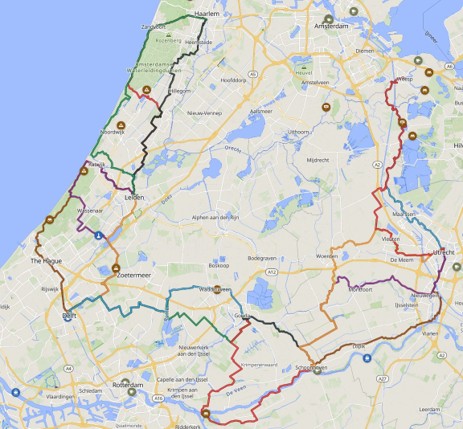
My husband and I joined board members of Bike Walk KY and Lexington’s Broke Spoke, along with friends and significant others, for two unforgettable weeks exploring the country. We began with five days in Amsterdam before setting out on an eight-day, 167 mile cycling tour through central Holland. Starting in Haarlem, our route took us through Leiden, Delft, The Hague, Gouda, Schoonhoven, Utrecht, and finally Weesp. Every mile reinforced one simple realization: in the Netherlands, bicycles are not an afterthought; they are an essential part of everyday life.
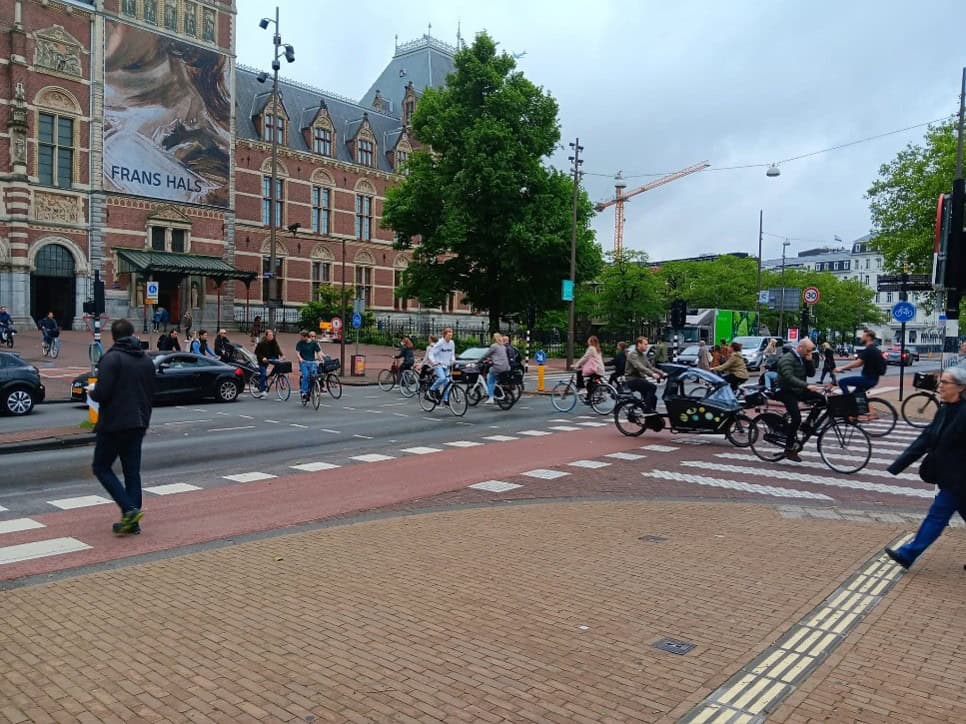
At first, the mix of bicycles, cars, and pedestrians seemed chaotic. After spending more time in the city, however, I realized that the apparent disorder created its own kind of order. Because everyone expected to encounter other road users, everyone stayed alert. Rather than depending on high speeds or wide streets, the Dutch system relies on human awareness. In many ways, that controlled chaos becomes a form of traffic calming.
Unlike many bicycle tours that are designed primarily for recreation, this trip offered a firsthand look at how an entire nation has integrated cycling into everyday life. We weren’t simply riding through the Netherlands, we were experiencing the country’s transportation system exactly as millions of Dutch citizens do every day.
What surprised me most wasn’t the number of bicycles, it was how ordinary cycling felt. Parents carried children to school, business professionals rode in work clothes, and seniors pedaled to the grocery store. Cycling wasn’t an event; it was simply how people got around. That normalcy is possible because of decades of thoughtful planning. People often ask what makes cycling so successful in the Netherlands. After spending two weeks there, I realized there isn’t one secret. Instead, the Dutch have spent decades creating a transportation system where riding a bicycle is simply the easiest and most practical way to travel.
The country’s cycling network includes more than 35,000 kilometers (22,000 miles) of dedicated bicycle routes. Nearly every road, from neighborhood streets to major highways, includes facilities designed specifically for cyclists. Whether riding through a city or across rural farmland, we were rarely without a clearly designated bicycle route or facility.
Several factors contribute to this remarkable success.
Cyclists are treated as legitimate transportation users, not an afterthought. Dedicated bicycle facilities are physically separated from motor vehicles using curbs, landscaped buffers, or wide bicycle lanes. At intersections, engineers don’t ask, “How can we fit bicycles into this design?” Instead, bicycles are considered from the very beginning.
Unlike many countries where cycling is viewed as recreation or exercise, bicycles in the Netherlands are simply another form of transportation.
Business professionals ride to work in business attire. Parents transport children in cargo bikes. Teenagers ride to school, and older adults run errands by bicycle. Cycling crosses every age group and income level because the infrastructure makes it safe, convenient, and practical.
The Netherlands also discourages excessive automobile use. High vehicle taxes, expensive parking, limited parking availability, and intentionally reduced road space make driving less convenient than cycling for many everyday trips. Rather than banning cars, the Dutch simply make bicycles the better option.
Learning the Dutch Street System
Although the Dutch bicycle network is extensive, it is also remarkably intuitive once you learn a few basic rules.
The first lesson is simple: stay in the bicycle lane whenever one is provided. After that, the road markings begin to make sense. One of the first pavement markings we learned was the “shark teeth” rows of white triangles painted across the roadway. Whenever the triangles pointed toward us, we knew we were required to yield.
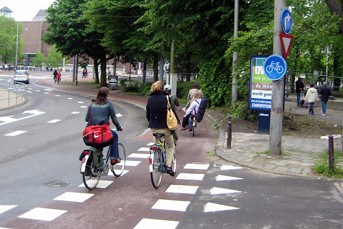
At uncontrolled intersections, another important rule applied: traffic approaching from the right generally has priority unless signs or pavement markings indicate otherwise.
Roundabouts were another pleasant surprise. In many urban areas, cyclists are given priority over entering automobiles, making these intersections surprisingly efficient and comfortable to navigate.
Traffic signals also require attention. Cyclists have their own signals that are separate from pedestrian crossings, so it is important to watch the bicycle signal rather than simply following pedestrians.
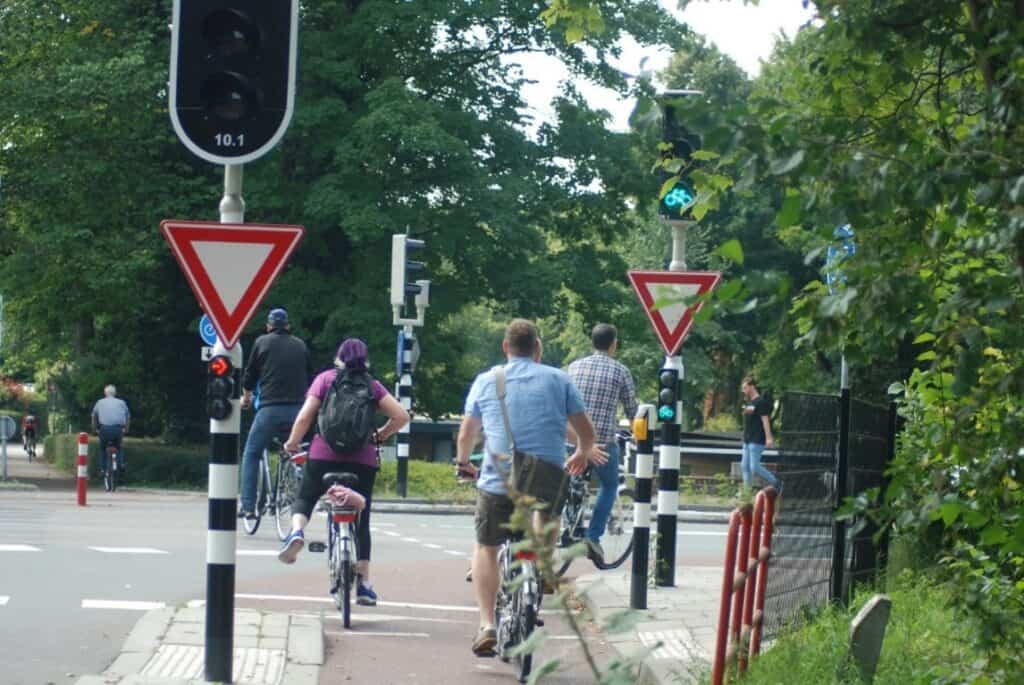
Everyday Cycling Etiquette
Many bicycle paths are wide enough for two people to ride side-by-side, making conversation easy. One unexpected sight was couples casually holding onto each other’s arm while riding together, something we rarely see in the United States.
Another noticeable difference was the lack of bicycle helmets. Very few cyclists wore helmets. Rather than relying on personal protective equipment, the Dutch rely on infrastructure that minimizes conflicts between bicycles and fast moving vehicles. And yes, just like back home, young riders somehow manage to text while riding.
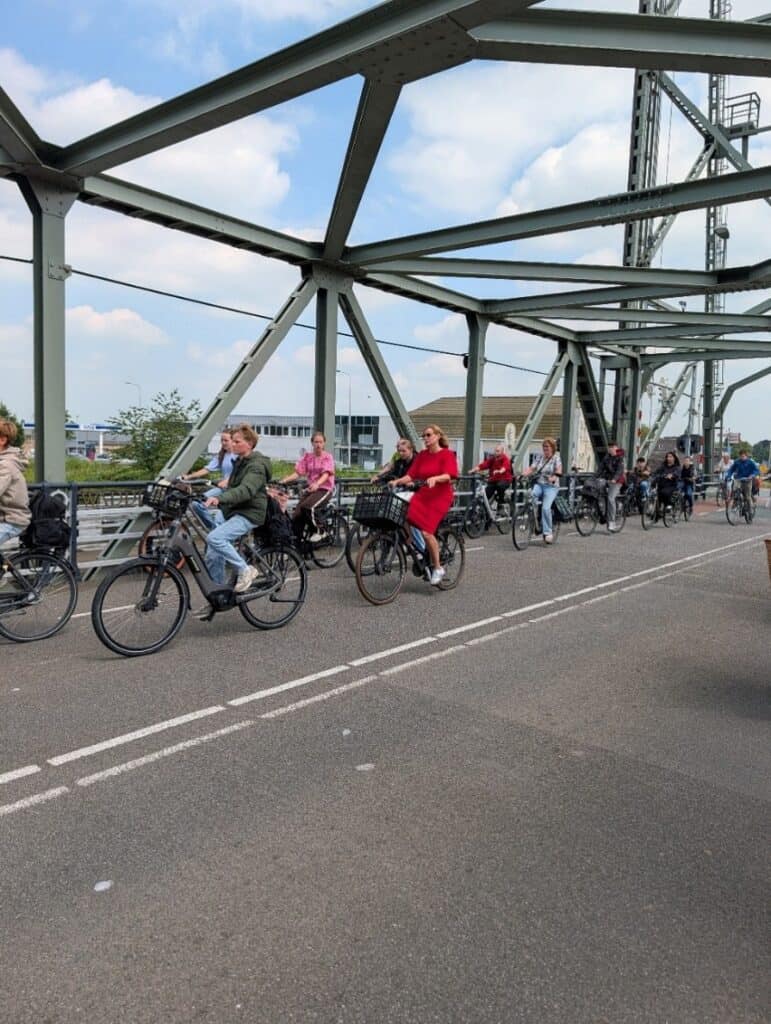
This photo was taken as school was letting out in Nijmegen, Netherlands. Students, parents, and local residents were heading home, and no one seemed to feel helmets were necessary. Cyclists in the United States are four to seven times more likely to die per mile traveled than cyclists in the Netherlands. Although the U.S. has far fewer riders overall, its fatality rate is worsened by car centered infrastructure, larger vehicles, and higher speed limits. By contrast, the Netherlands has enormous cycling volumes while maintaining exceptionally high per-mile safety. Dutch fatality totals can appear high. around 280 to 290 deaths in recent years, but that reflects how much of the population cycles daily. Another striking detail is that about 70% of cycling deaths in the Netherlands involve people over age 70 who fall from e-bikes. Yikes, I am in that demographic. In the U.S., bicyclist deaths are around 1,100 annually and have increased over the past decade.
Cyclists in the United States are four to seven times more likely to die per mile traveled than cyclists in the Netherlands. Although the U.S. has far fewer riders overall, its fatality rate is worsened by car centered infrastructure, larger vehicles, and higher speed limits.
Once we understood how to navigate the Dutch cycling network, we began noticing something even more impressive. The infrastructure didn’t just accommodate cyclists, it subtly influenced everyone’s behavior, from motorists to pedestrians.
One of the most impressive aspects of Dutch transportation engineering is how effectively speed is controlled without relying solely on enforcement.
The goal isn’t simply to post lower speed limits, it’s to design streets that naturally encourage slower driving.
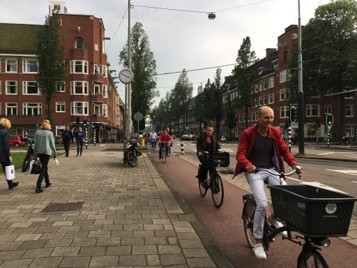
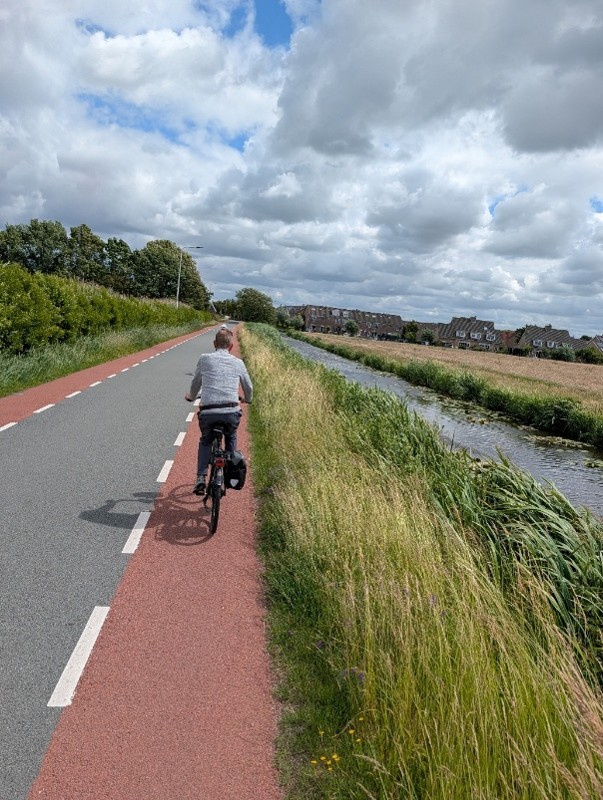
Throughout our trip, we noticed that every transportation mode had its own clearly defined space. Bicycle lanes were almost always marked with distinctive red pavement, sidewalks were separated from both bicycles and vehicles, and travel lanes were intentionally narrow. In most cases, each facility was separated by a vertical curb.
By the second day, we no longer had to wonder where bicycles belonged. Whenever we were unsure, we simply looked for the red pavement. It became our visual compass and our most reliable guide throughout the trip.
Amsterdam recently lowered the default speed limit on most city streets to 30 kilometers per hour (18.6 mph). As someone who has long advocated for lower urban speed limits in the United States, I expected the city to feel slow.
It didn’t. Because every transportation mode interacts constantly, drivers naturally remain attentive. The street design itself encourages appropriate speeds without making travel feel inconvenient.
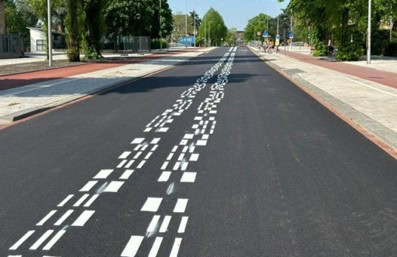
One particularly clever innovation introduced in 2023 is a wide dashed centerline composed of white rectangles that spell the number 30 when viewed from a driver’s perspective. The pattern simultaneously reinforces the speed limit while visually narrowing the roadway, subtly encouraging slower speeds.
We also noticed another interesting design treatment on many rural roads. Rather than providing separate travel lanes for opposing traffic, the roadway featured wide red bicycle lanes on each side, with motor vehicles sharing the remaining center space. Drivers naturally slowed and negotiated passing movements whenever oncoming traffic approached.
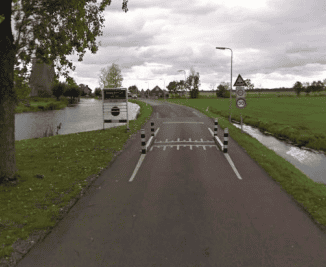
Finally, the Dutch make extensive use of speed tables instead of the sharper speed humps commonly found in the United States. These longer, flatter raised crossings allow comfortable travel at the posted speed while discouraging excessive speeding.
They are effective without being uncomfortable—another example of engineering that guides behavior rather than punishing it.
Bridges Built for Cyclists
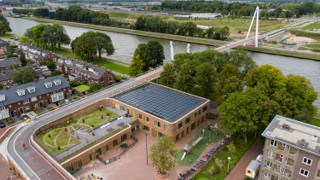
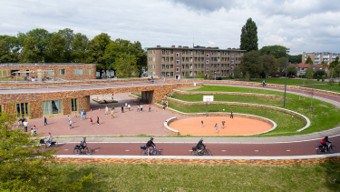
The bike infrastructure of the Netherlands rivals our interstate system. Two of my favorite bridges were the Dafne Schippers Bridge, which integrated a bicycle and pedestrian bridge with a primary school and a park into one coherent design. The connection between the historic city center of Utrecht and the new district of Leidsche Rijn leads cyclists and passengers in a loop over the roof of the school to get across the Amsterdam-Rhine Canal. Because of the dual-use of land and the optimal integration of various needs, the Dafne Schippers Bridge has become an icon for the city of Utrecht and the Dutch approach to sustainable cycling infrastructure.
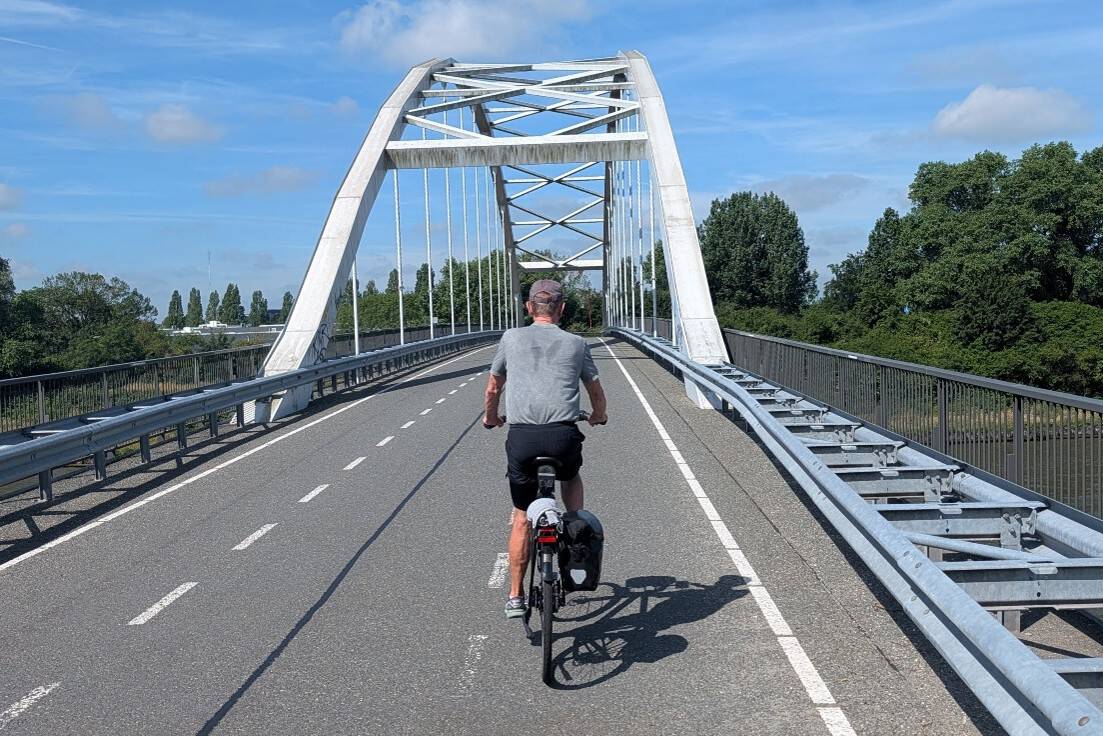
The other impressive bridge was the Liniebrug, which is a 600 meter walking/cycling tied arch bridge that connects the villages of Nigtevecht and Abcoude on either side of the Amsterdam-Rhine Canal. It was constructed in 2018 at a cost of roughly 27 million euros *($30 million). This unique bridge is a prime example of the investment that this country is making.
Windmills, Canals, and Dutch History
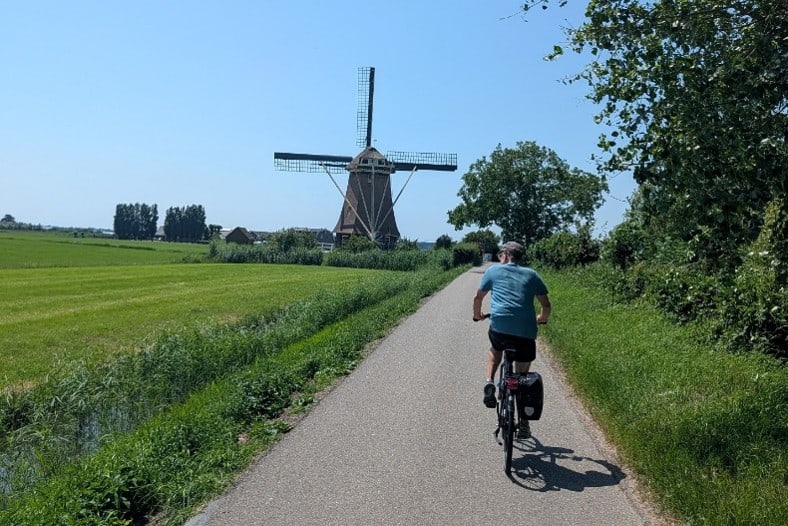
Of course, when you think of the Netherlands you think of the windmills. We saw a lot of windmills, most of which were operational and very old.
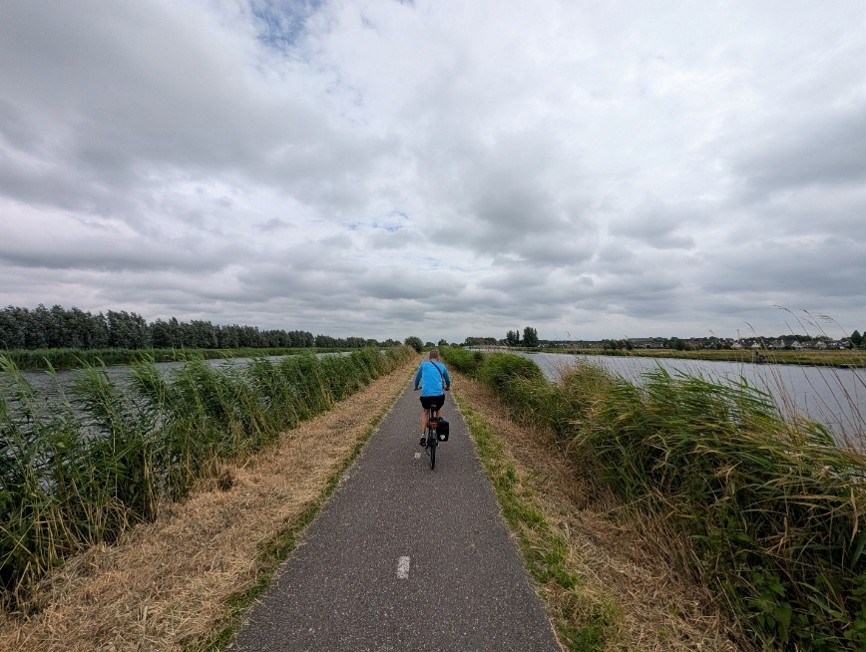
The trails between the canals are impressive. The engineering required to move water from one canal to the other, in order to reclaim land has been going on for centuries.
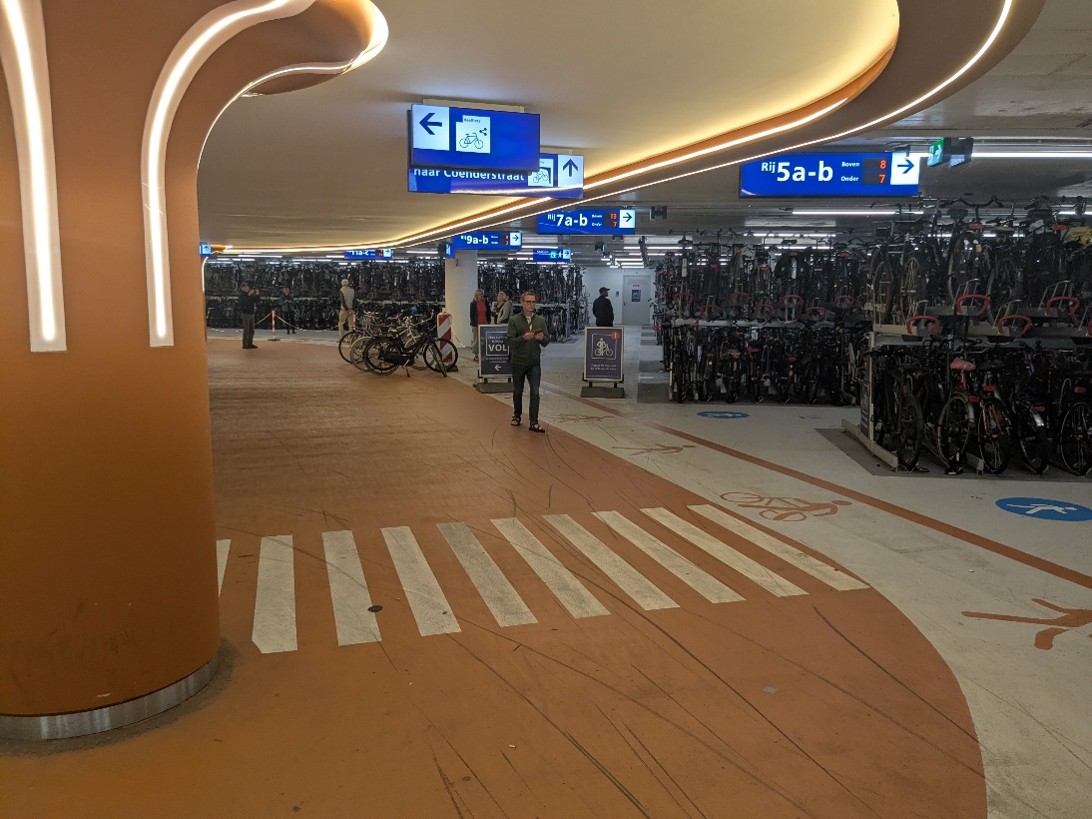
Bike parking in the Dutch train stations is impressive. Most train stations have free parking for the first 24 hours and after that is it is about €1.35 (about $1.54 at the time of our visit). The garages feature double decker racks, digital space tracking and easy check-in. The largest bicycle garage has 12,500 spaces which is located in Utrecht.
The garage below was in Delft and held 8,000 bikes.
Lessons for the United States that I brought home
- The Netherlands didn’t become a cycling nation overnight.
- Their success came from decades of consistent investment.
- The biggest lesson isn’t about bicycles, it’s about designing streets for people.
- Safer streets benefit everyone, whether they walk, bike, drive, or use transit.
Before this trip, I admired Dutch transportation planning from a professional distance. After cycling 167 miles through the country, I understand why it works. The Dutch didn’t simply build bicycle paths, they built a transportation system that makes the safest, healthiest, and most sustainable choice the easiest one. That may be the most important lesson of all.